Your Phone Isn't the Problem. Your Feed Is.
Digital wellbeing advice usually sounds like this: "Put your phone down. Go outside. Read a book. Be present."
This advice is correct and completely useless.
You're not going to put your phone down. Your phone is where your life happens — your communication, your banking, your calendar, your photos, your music, your navigation. Telling a modern human to "use your phone less" is like telling a Victorian to "use fewer trains."
The question isn't whether to use your phone. It's how to use your phone. And the difference between healthy and unhealthy phone use isn't about time — it's about content.
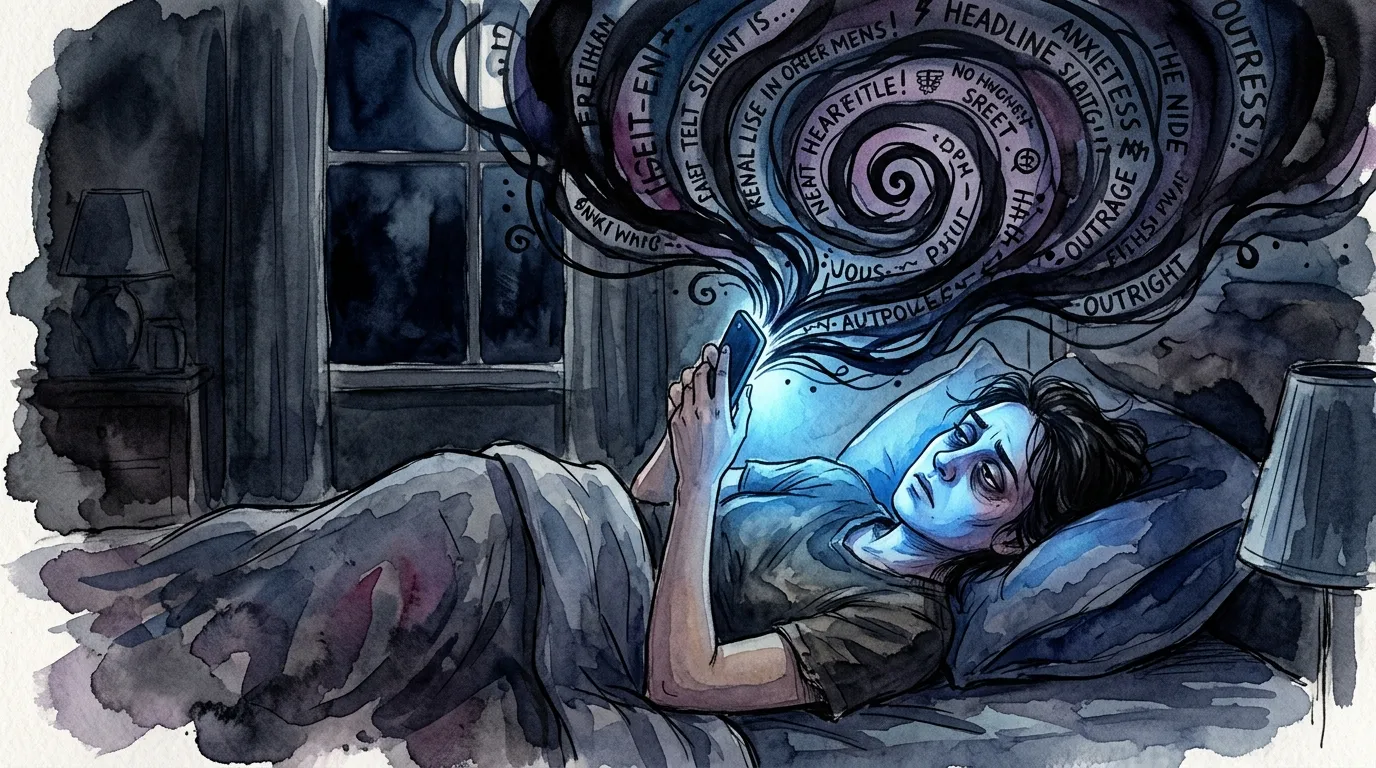
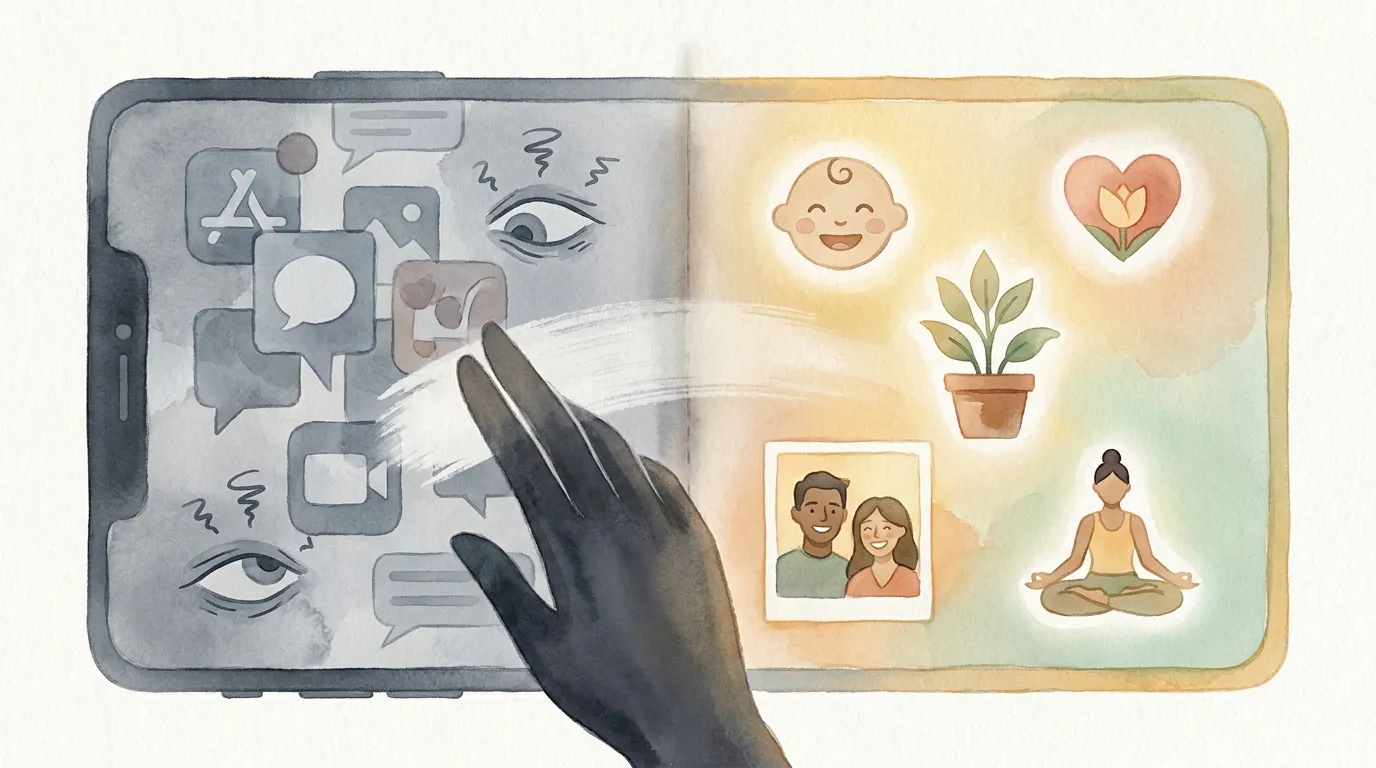
30 minutes of nurturing a virtual baby on your phone produces oxytocin, reduces cortisol, and improves your mood. 30 minutes of doomscrolling on the same phone increases cortisol, triggers comparison, and worsens your mood.
Same device. Same duration. Completely opposite neurological outcomes.
That's digital wellbeing. Not less screen time. Better screen time.
The Quality Screen Time Framework
Screen time falls into two categories:
Junk Screen Time
The research behind this: A 2025 meta-analysis in the Journal of Behavioral Addictions found that replacing passive screen time with active digital engagement (virtual nurturing, creative apps, learning tools) reduced anxiety symptoms by 34% compared to simply reducing screen time. The key insight: your brain doesn't need LESS phone time. It needs BETTER phone time. Active digital engagement — where you give care, create something, or connect meaningfully — produces oxytocin and purpose. Passive scrolling produces only dopamine crashes and comparison anxiety.Passive consumption that extracts attention without providing value:
- Mindless scrolling through feeds
- Doomscrolling news
- Social comparison on Instagram/TikTok
- Watching content you won't remember in 10 minutes
- Checking notifications compulsively
Neurological effect: Dopamine-seeking (wanting more), cortisol increase (stress), oxytocin decrease (disconnection)
Quality Screen Time
Active engagement that provides genuine emotional or cognitive value:
- Nurturing virtual companions (AIdorable)
- Video calls with family and friends
- Creative activities (drawing, writing, music apps)
- Learning something new
- Meditation and mindfulness apps
- Meaningful messaging conversations
Neurological effect: Oxytocin release (bonding), dopamine reward (satisfaction), cortisol reduction (calm)
The digital wellbeing goal isn't to eliminate screen time. It's to maximize quality and minimize junk.
The 5 Pillars of Digital Wellbeing
Pillar 1: Intention
You pick up your phone because you decided to, not because a notification told you to.
The practice: Before unlocking your phone, ask: "What am I going to do?" If you can't answer, don't unlock it. If the answer is "check if anything happened," that's compulsion, not intention.
The upgrade: Replace the compulsion check with a nurturing check. Instead of "did anyone like my post?", ask "does my baby need me?" Different question, different neurochemistry.
Pillar 2: Nurturing
Your phone provides daily opportunities for caregiving — virtual pets, plants, babies. These micro-nurturing moments activate bonding hormones and create a sense of daily purpose.
The practice: Spend 2-5 minutes each day nurturing something on your phone. AIdorable's virtual baby, a digital garden, a pet app. The nurturing triggers oxytocin that makes you feel connected and capable.
Why it matters: Most people's phones take from them (attention, time, emotional energy). Nurturing apps give back. Your phone becomes a source of emotional nourishment instead of emotional extraction.
Pillar 3: Boundaries
Your phone has defined roles in your life — and defined places where it's not welcome.
The practice:
- Phone-free first 30 minutes after waking (use an alarm clock instead)
- Phone-free during meals
- Phone in another room for one hour daily
- Phone face-down during conversations
Why it matters: Boundaries create space. Space creates presence. Presence creates connection — with yourself and others.
Pillar 4: Awareness
You know how you actually use your phone — not how you think you use it.
The practice: Check your screen time data once per week. Not to judge yourself, but to understand patterns. "I spent 3 hours on Instagram" isn't a failure — it's information. What triggered those 3 hours? When did it happen? What were you feeling?
Why it matters: You can't change what you don't understand. Screen time awareness creates the foundation for intentional change.
Pillar 5: Physical Balance
Screen time is balanced with physical activity, real-world social interaction, and adequate sleep.
The practice: For every hour of screen time, spend 10 minutes in physical activity. Walk, stretch, exercise. Your body needs movement to process the cognitive load of digital engagement.
Why it matters: Digital wellbeing isn't just digital — it's the integration of digital life with physical life. The healthiest phone users move their bodies regularly and spend time in physical proximity to other humans.
The Digital Wellbeing Audit
Take 5 minutes to audit your phone:
1. Home Screen Audit
Look at your home screen. Which apps make you feel good when you use them? Which make you feel worse? Rearrange so that feel-good apps are prominent and feel-bad apps are hidden in folders.
2. Notification Audit
Which notifications give you genuine joy or important information? Which create anxiety or compulsion? Turn off the latter. Keep only notifications from real humans and nurturing apps.
3. Time Audit
Check screen time for the past week. Which apps consumed the most time? Did that time investment produce proportional value? If an app took 5 hours and gave you nothing, it's extraction, not engagement.
4. Emotional Audit
After using each app, rate how you feel: +2 (great) to -2 (terrible). Track this for 3 days. The pattern will be clear: some apps drain you, some nourish you. Keep the nourishers. Minimize the drainers.
5. Purpose Audit
Which apps serve a clear purpose in your life? Which are just there because you've always had them? Delete apps that serve no purpose. Every app on your phone should earn its space.

The Digital Wellbeing Sweet Spot
Research on digital wellness suggests an optimal daily balance:
| Activity | Time | Quality |
|---|---|---|
| Nurturing/creative phone use | 15-30 min | High (oxytocin, dopamine reward) |
| Communication (calls, texts) | 20-40 min | High (social bonding) |
| Social media (intentional) | 15-30 min | Medium (mixed neurochemistry) |
| Productivity/utilities | 30-60 min | Neutral |
| Offline physical activity | 60+ min | High (endorphins) |
| Offline social interaction | 60+ min | High (oxytocin, presence) |
| Total quality screen time | 50-100 min | |
| Total offline time | 120+ min |
The sweet spot isn't zero screen time. It's screen time that serves you — plus enough offline time to keep your body and relationships healthy.

Your Phone, Redesigned
Digital wellbeing isn't about becoming a different person. It's about redesigning your phone to serve the person you already are.
Your phone can be:
- A slot machine that exploits your neurology (current state for many)
- A tool that supports your health, creativity, and relationships (possible state)
The difference isn't the phone. It's what you put on it and how you use it.
Add a nurturing app. Remove a draining one. Turn off notifications that create anxiety. Turn on notifications that create connection.
Small changes. Same phone. Different relationship.
And maybe that's what digital wellbeing really means: not fearing your phone, not fighting your phone, but building a phone relationship where the time you spend on it makes your life better instead of worse.
You deserve that. And it's closer than you think — just one home screen rearrangement away.
Related Articles
For the complete guide, see our Women's Self-Care hub.
You might also find helpful: