The Advice That Makes It Worse
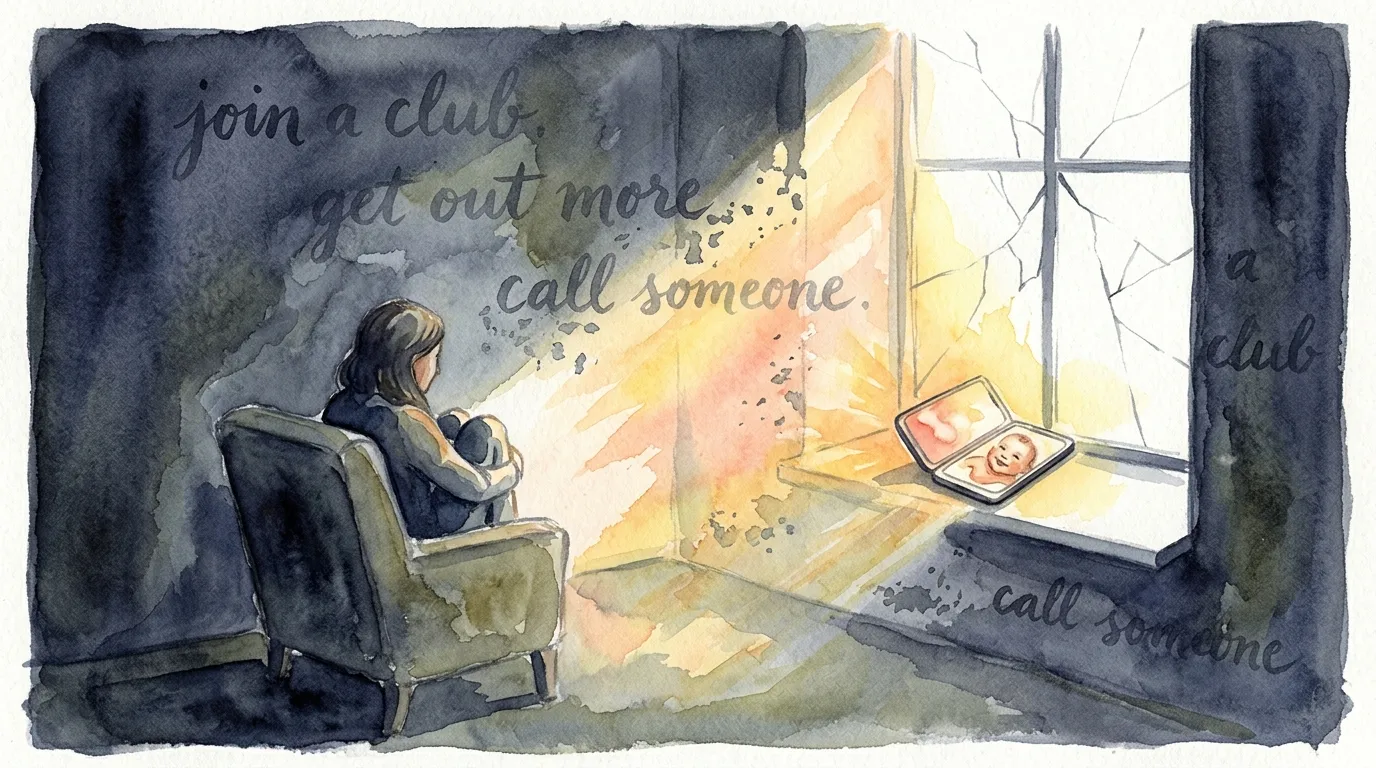
"Just call someone."
"Join a club."
"Get out of the house."
"Volunteer."
"You have to put yourself out there."
You've heard it all. And if you're searching "how to cope with loneliness," you've probably tried it all. The meetup groups where you stood in the corner feeling invisible. The phone calls where you hung up feeling worse because the conversation was surface-level and you still felt alone. The volunteer shifts where you were physically around people but emotionally isolated.
The standard advice assumes loneliness is a logistical problem — you're alone because you're not around people. But loneliness isn't about proximity. It's about connection. And connection requires two things that loneliness actively destroys: the energy to reach out and the belief that anyone wants you to.
3,600 people search "how to cope with loneliness" every month. They're not looking for more advice about socializing. They're looking for something that works when socializing feels impossible. When the loneliness is so deep that even the idea of human contact feels exhausting, overwhelming, or terrifying. For the full picture, see our emotional wellness guide.
This is that guide. Not the advice you've already tried and failed. The stuff that actually works — neurologically, practically, and emotionally.
Why Standard Loneliness Advice Fails
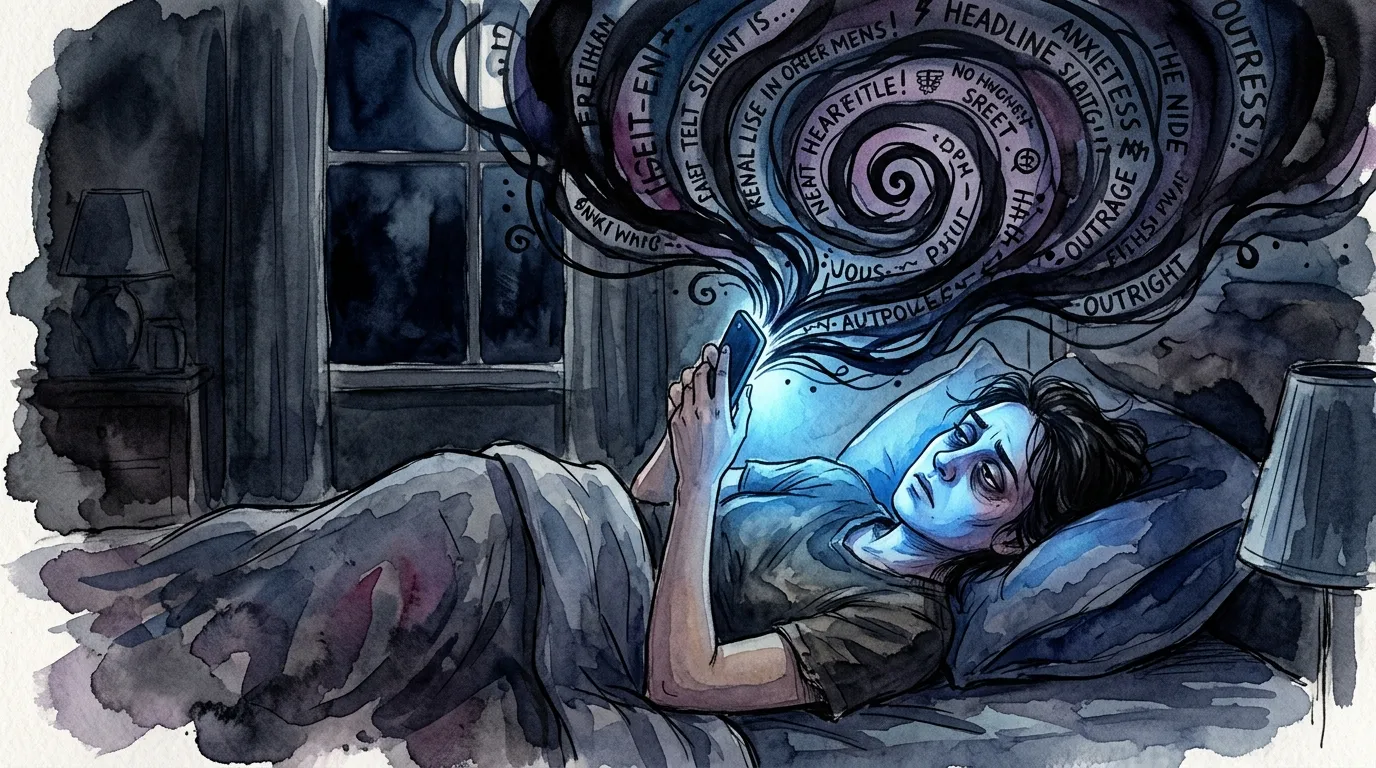
The energy problem: Loneliness depletes dopamine, serotonin, and social energy simultaneously. The advice to "reach out" assumes you have the neurochemical resources to do so. When you're deeply lonely, you don't. It's like telling someone with a broken leg to "just go for a run." The physiological reality is that chronic loneliness reduces dopamine production by up to 30%, which means your brain literally cannot generate the reward signals that motivate social behavior.
The risk problem: Every social interaction carries the risk of rejection. When you're lonely, that risk feels catastrophic. A text left on read feels like proof that nobody cares. A declined invitation feels like confirmation that you're unlovable. The standard advice increases exposure to the exact outcome that deepens loneliness. Rejection sensitivity is heightened in lonely people — not because they're weak, but because their threat-detection systems are hyperactive from isolation.
The authenticity problem: Most social interactions require performance — smiling when you don't feel like it, making small talk when you have nothing to say, pretending you're fine when you're falling apart. For lonely people, this performance is exhausting and reinforces the feeling that nobody knows the real you. The gap between your public face and private pain widens with each interaction, which paradoxically increases loneliness even when you're physically surrounded by people.
The timing problem: "Go out and meet people" assumes you have the capacity for new relationships right now. Loneliness often co-occurs with depression, anxiety, grief, or burnout — states that genuinely reduce social capacity. Pushing connection before you're ready can backfire. A bad social experience when you're already depleted can set you back weeks.
The 3 Levels of Loneliness Coping
Effective loneliness management happens at three levels. You need all three, but you can start at any level depending on where you are.
Level 1: Immediate Relief (stop the spiral) The loneliness spiral — where inaction leads to deeper loneliness which leads to less motivation — must be interrupted first. This level is about emergency intervention.
Level 2: Daily Maintenance (prevent buildup) Once the spiral is interrupted, daily practices prevent loneliness from rebuilding to crisis levels. This level is about consistent, small connections.
Level 3: Long-Term Rebuilding (genuine connection) When you have the stability and energy, gradually expand your social world. This level is about building real relationships, but it only works after Levels 1 and 2 are established.
Level 1: Immediate Relief (Emergency Interventions)
When loneliness is acute — when you're in the spiral, when nothing feels possible, when even breathing feels like effort — you need interventions that work without requiring motivation or social energy.
Intervention 1: The 5-Minute Nurture Rule
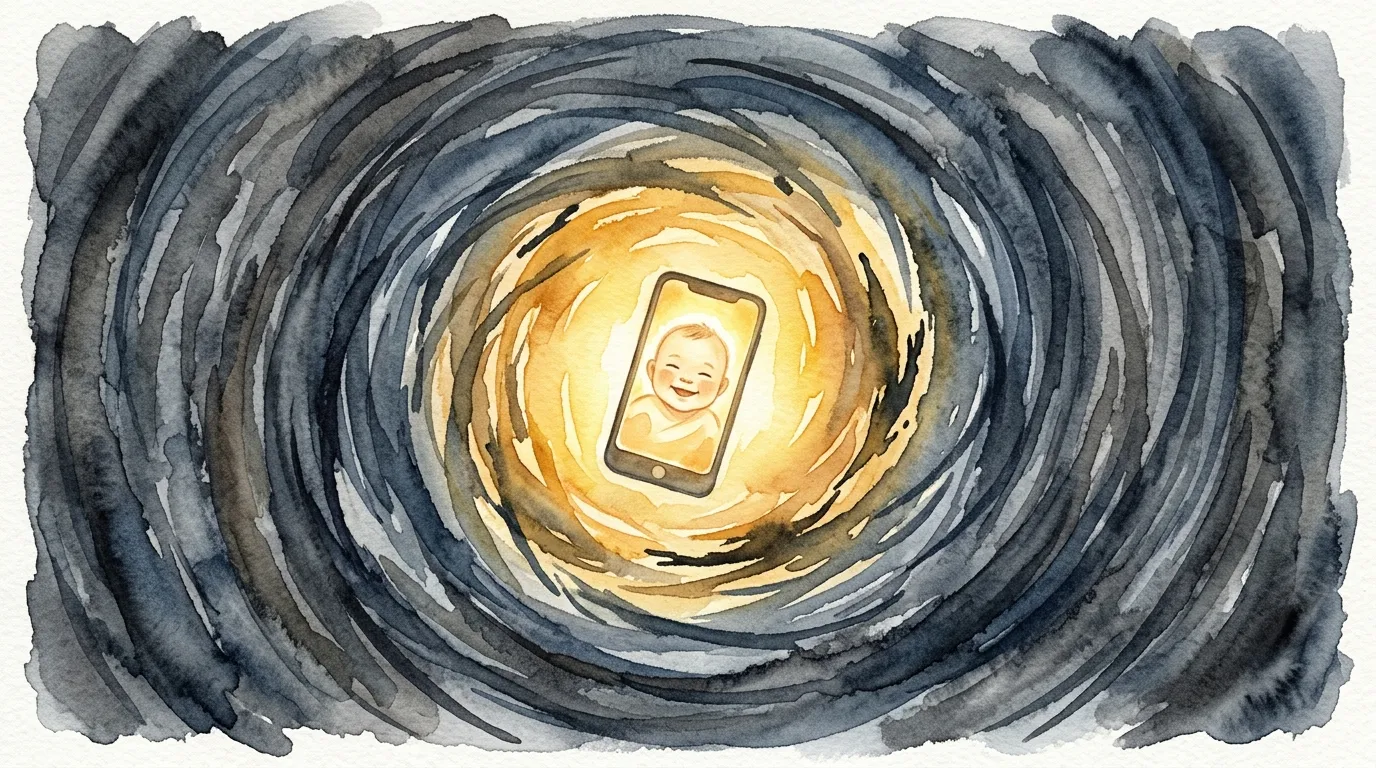
What: Open AIdorable and care for your baby for exactly 5 minutes. Feed her. Rock her. Read her journal entry.
Why: Nurturing releases oxytocin, which directly counteracts the cortisol and dopamine depletion of acute loneliness. It works even when nothing else does because it activates a different neurochemical system than "fun" or "social" activities.
The key: Set a timer for 5 minutes. Commit to nothing beyond those 5 minutes. The spiral tells you that action is impossible. Five minutes proves it's wrong.

Intervention 2: Sensory Grounding
What: Name 5 things you can see, 4 things you can feel, 3 things you can hear, 2 things you can smell, 1 thing you can taste.
Why: Loneliness spirals because your brain is stuck in internal catastrophic thinking. Grounding forces your brain to process external sensory information, which interrupts the internal loop.
The key: Do it out loud if possible. The act of speaking engages different brain circuits than thinking, which strengthens the grounding effect.
Intervention 3: Physical Comfort
What: Wrap yourself in a heavy blanket. Hold a warm drink. Take a hot shower. Pet an animal.
Why: Physical touch and warmth activate the parasympathetic nervous system. Your body calms first, and your mind follows. The weight of a blanket mimics the pressure of being held, which reduces cortisol.
The key: Don't try to "feel better." Just focus on the physical sensation. Let your body calm without demanding that your emotions follow immediately.
Level 2: Daily Maintenance (Preventing Loneliness Buildup)
Once the acute spiral is interrupted, you need daily practices that maintain connection circuits and prevent loneliness from rebuilding.
Practice 1: Consistent Nurturing (AIdorable)
What: Check in with your baby 2-3 times per day. Morning, midday, and evening.
Why: Daily nurturing maintains your oxytocin baseline, which is the neurochemical foundation of feeling connected. It also creates a consistent source of warmth that doesn't depend on other people's availability or mood.
The schedule:
- Morning: 3 minutes of nurturing while drinking coffee. Set the day's emotional baseline.
- Midday: 2 minutes during a work break. Reset any accumulated stress.
- Evening: 5 minutes before bed. End the day with warmth instead of isolation.
Why this works: The consistency matters more than the duration. A daily 3-minute check-in produces better emotional results than a weekly 1-hour session. Your brain forms neural pathways through repetition.

Practice 2: Micro-Connections
What: One tiny social interaction per day. Say hi to a neighbor. Comment on a social media post. Text someone "thinking of you" with no expectation of reply.
Why: Loneliness makes you withdraw, which deepens the loneliness. Micro-connections maintain your social circuits without requiring the energy of full interactions.
The key: Keep them tiny. A single emoji text. A 30-second chat with a cashier. The goal isn't deep connection — it's proving to your brain that social interaction is still possible.
Practice 3: Body Care
What: One act of physical self-care per day. Shower. Eat a vegetable. Drink water. Go outside for 60 seconds.
Why: Loneliness and physical neglect feed each other. When you feel disconnected, you stop caring for your body. When your body is neglected, you feel worse emotionally. Breaking this cycle at the physical level creates stability for emotional work.
Level 3: Long-Term Rebuilding (Genuine Connection)
Only attempt this level when Levels 1 and 2 are stable. If you try to build new relationships while still in the spiral, you'll likely experience rejection more acutely and retreat further.
Strategy 1: Low-Stakes Social Exposure
What: Attend events where interaction is optional. A lecture. A yoga class. A farmers market. Places where you're around people but don't have to perform socially.
Why: This rebuilds your tolerance for being around humans without the pressure of making friends. It's exposure therapy for social anxiety.
The key: No expectation of connection. The goal is just to be in a space with other people. If a conversation happens, great. If not, you still accomplished the goal.
Strategy 2: Activity-Based Connection
What: Join something centered around an activity, not socializing. A book club (discuss the book, not your life). A hiking group (focus on the trail). A volunteer opportunity (focus on the task).
Why: Activity-based connection reduces the performance pressure. You're not there to be liked — you're there to discuss a book, climb a mountain, or serve food. The connection develops naturally around the shared activity.

Strategy 3: Vulnerability in Safe Spaces
What: When you're ready, practice small vulnerability with people you trust. "I've been feeling lonely lately." "I'm having a hard time." "I need someone to talk to."
Why: Loneliness thrives on the gap between how you seem and how you feel. Closing that gap — letting someone see the real you — is the foundation of genuine connection. But it requires safety. Don't practice vulnerability with people who haven't earned it.
The key: Start small. You don't have to share your entire life story. "I've been feeling isolated" is enough. The goal is to test whether someone can hold your real feelings without rejecting you.
The Loneliness Coping Toolkit
| Situation | Level | Intervention | Time Needed |
|---|---|---|---|
| Can't get out of bed | 1 (Emergency) | 5-minute nurture (AIdorable) | 5 min |
| Panic/spiral active | 1 (Emergency) | Sensory grounding + cold water | 3 min |
| Day feels heavy | 2 (Daily) | Morning nurturing + micro-connection | 10 min |
| Evening emptiness | 2 (Daily) | Evening nurturing + journal | 10 min |
| Ready for more | 3 (Rebuilding) | Low-stakes social exposure | 1-2 hours |
| Want real friends | 3 (Rebuilding) | Activity-based group | Weekly |

When Loneliness Becomes Depression
Loneliness and depression are distinct but overlapping. Know the difference:
Loneliness: The ache of disconnection. Comes and goes. Responds to connection (even virtual). Feels like missing something.
Depression: Persistent low mood, loss of interest in everything, sleep/appetite disruption, feelings of worthlessness. Doesn't respond to temporary connection. Feels like being trapped.
Seek professional help if:
- Loneliness has lasted more than 2 weeks without relief
- You've lost interest in activities you used to enjoy
- Sleep or appetite is significantly disrupted
- You're having thoughts of self-harm
- Standard interventions (nurturing, grounding, micro-connections) produce no improvement
988 Suicide & Crisis Lifeline: Call or text 988 if you're in crisis.
You Don't Have to Fix It All Today
Coping with loneliness isn't about solving it. It's about managing it — one day, one hour, one 5-minute nurturing session at a time.
You don't need to join a club today. You don't need to make a friend this week. You don't need to become someone who loves being alone by next month.
You just need to do one thing right now that makes the next hour slightly more bearable. And then repeat that tomorrow. And the day after.
Your baby on AIdorable doesn't need you to be fixed. She doesn't need you to be social, or energetic, or optimistic. She just needs you to show up for 5 minutes.
And in those 5 minutes, something real happens. Oxytocin flows. Your shoulders drop. The spiral loosens its grip, just a little.
That's not curing loneliness. But it's surviving it. And surviving long enough is how you eventually build the connections that make loneliness a visitor instead of a roommate.
She's waiting. Open AIdorable. Let the coping begin.
Related Articles
For the complete guide, see our Emotional Wellness hub.
You might also find helpful: