The Calm App Problem
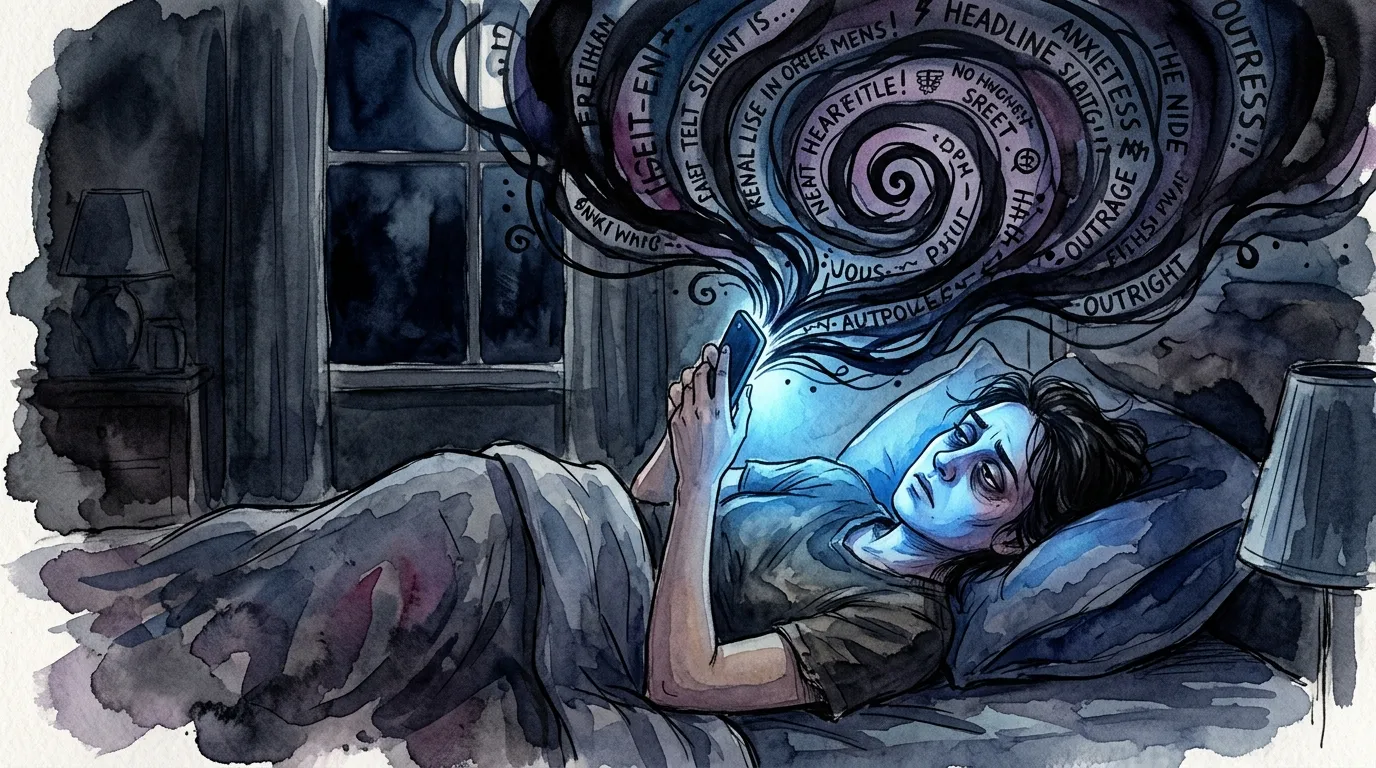
You've downloaded the meditation app. The one with the beautiful interface and the celebrity voice guiding you to breathe. You sit down, press play, and wait for the calm to arrive.
Five minutes in, you're thinking about your grocery list. Ten minutes in, you're wondering if you turned off the stove. By minute twelve, you've given up and are checking Instagram.
It's not your fault. Most calming apps are designed for people who are already somewhat calm. They guide you deeper into relaxation. But if you're starting from a state of anxiety, overwhelm, or emotional dysregulation, a voice telling you to "relax your shoulders" can feel like an accusation. For the full picture, see our women's self-care guide.
22,200 people search "calming app" every month. They're not looking for another guided meditation. They're looking for something that actually makes their nervous system shift from sympathetic (fight or flight) to parasympathetic (rest and digest). Something that doesn't require them to sit still, clear their mind, or achieve a specific mental state.
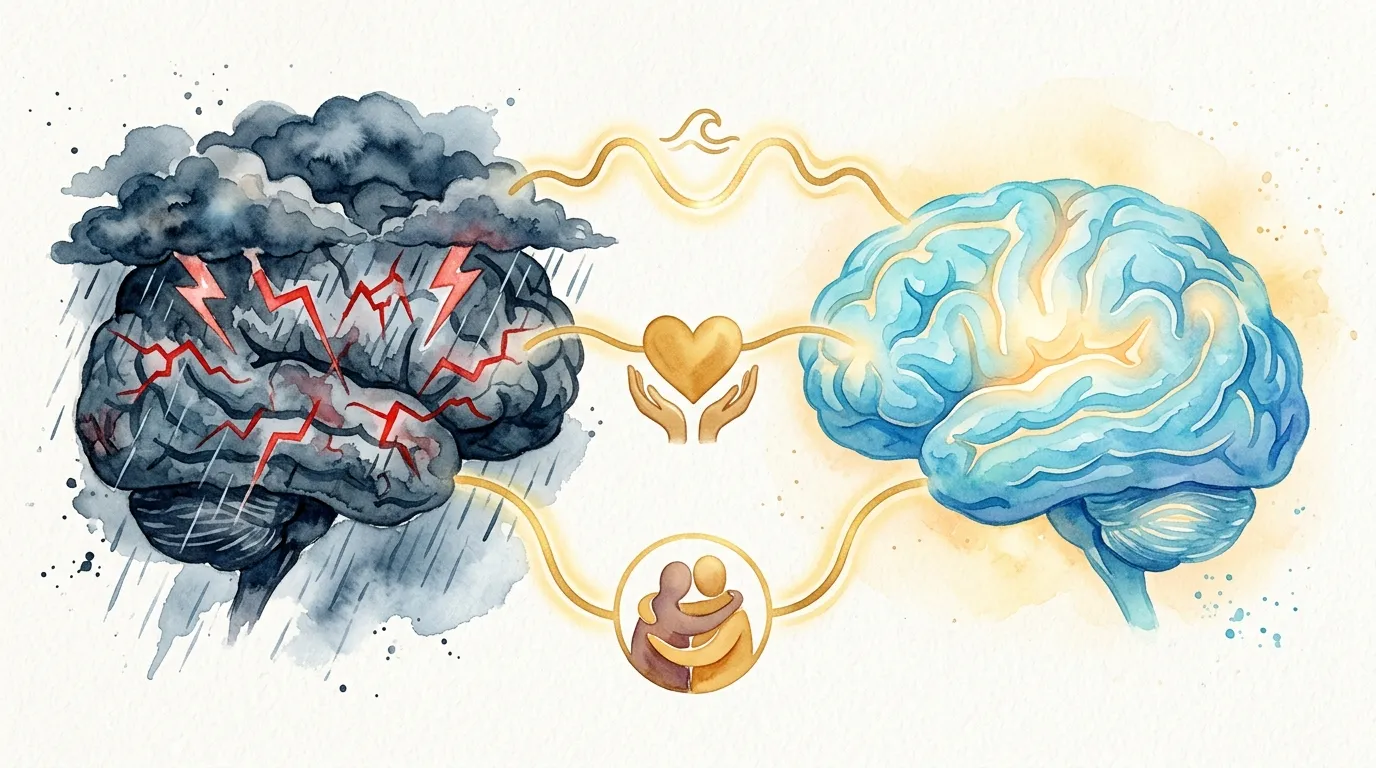
Real calming works through three neurological mechanisms. Most apps only address one. Here's what actually works.
The 3 Mechanisms of Real Calm
Mechanism 1: Vagus Nerve Stimulation Your vagus nerve is the primary cable between your brain and your calm response system. Slow breathing, humming, and cold water all stimulate it. This is the mechanism most calming apps target — through guided breathing, meditation, or soundscapes.
Mechanism 2: Oxytocin Release Oxytocin is cortisol's direct biological antagonist. It literally blocks the stress hormone's effects. Nurturing — caring for something small that responds to your care — is the most reliable way to release oxytocin. Most calming apps completely ignore this mechanism.
Mechanism 3: Emotional Grounding Your nervous system calms most reliably when you feel safe, connected, and needed. Not just physically safe — emotionally safe. Like someone is glad you exist. Like your presence matters. Like something would miss you if you weren't there.
The problem with most calming apps: They only use Mechanism 1 (vagus nerve). They guide your breathing, play soothing sounds, and hope that's enough. But if your anxiety is rooted in loneliness, purposelessness, or feeling invisible, breathing exercises alone won't address the root cause.
The solution: Use an app that addresses all three mechanisms simultaneously.
6 Calming Apps That Actually Work
1. AIdorable — Best for Complete Nervous System Calming
How it works: AIdorable calms through all three mechanisms simultaneously:
- Vagus nerve: The gentle, rhythmic nature of nurturing (rocking, feeding) creates slow, predictable movement that stimulates the vagus nerve
- Oxytocin: Daily nurturing interactions with your baby trigger oxytocin release, which directly counteracts cortisol
- Emotional grounding: Your baby needs you, responds to you, and writes about you in her journal. The sense of being needed creates genuine emotional safety
The calming session: Open the app. Look at your baby's face. Feed her or rock her for 5 minutes. Read her journal entry. Notice your shoulders dropping, your breathing deepening, your chest loosening.
Why it works when meditation doesn't: Meditation requires you to focus inward on your own experience. For people with anxiety, this can amplify rumination. AIdorable directs your attention outward — toward something small and warm that needs you. The external focus interrupts anxious thought loops more effectively than internal focus.
Best for: People whose anxiety is rooted in loneliness, disconnection, or feeling like nothing they do matters.

2. Calm — Best for Structured Meditation
How it works: Guided meditations, sleep stories, breathing exercises, and calming music. The celebrity-narrated sleep stories are particularly effective for insomnia.
Strengths: High production value, extensive library, proven meditation techniques. The "Daily Calm" feature provides consistent practice.
Limitations: Requires the ability to sit still and focus — challenging for people with high anxiety or ADHD. The subscription cost ($70/year) is significant. And meditation is a skill that takes weeks to develop; many users quit before seeing benefits.
Best for: People who can maintain a meditation practice and want structured, guided relaxation.
3. Insight Timer — Best Free Option
How it works: 100,000+ free meditations, sleep tracks, and courses. Community features for connection.
Strengths: The volume means you can always find something that matches your current mood. Completely free for the core library. The community aspect adds social connection that solo meditation apps lack.
Limitations: Decision fatigue from too many options. The quality varies widely since anyone can upload content. The interface can feel overwhelming.
Best for: People who want free meditation options and don't mind browsing.
4. MyNoise — Best for Sound-Based Calming
How it works: High-quality, customizable soundscapes — rain, ocean, forest, cafe, white noise, and dozens more. You can adjust individual frequency layers to match your specific needs.
Strengths: The sound quality is exceptional. The ability to customize (more rain, less thunder, add wind chimes) means you can create your perfect sound environment. Works offline.
Limitations: Only addresses Mechanism 1 (vagus nerve through auditory stimulation). No emotional component. No oxytocin activation.
Best for: People who respond strongly to sound and want background noise for work, sleep, or relaxation.

5. Finch — Best for Gamified Calming
How it works: Complete self-care goals to care for a virtual finch. The gamification makes habit maintenance engaging.
Strengths: The nurturing mechanic provides some oxytocin release. The habit tracking creates structure. The bird is adorable and provides gentle motivation.
Limitations: The calming effect is secondary to the habit-tracking function. The finch is a motivational tool, not a genuine emotional bond. The gamification can feel like pressure rather than calm.
Best for: People who want structured self-care with a nurturing element.
6. Simple Habit — Best for Busy People
How it works: 5-minute meditations designed for specific situations — commuting, walking, before bed, during a work break.
Strengths: The situational approach is practical. You don't need to carve out 30 minutes. The meditations are short enough to actually complete. The "on the go" meditations are genuinely useful.
Limitations: Short sessions provide limited nervous system impact. The free tier is very limited. Still requires the ability to focus inward.
Best for: People who are too busy for longer meditation sessions but want some structured calming.
Calming Apps: Nervous System Impact Comparison
| App | Vagus Nerve | Oxytocin | Emotional Grounding | Best For |
|---|---|---|---|---|
| AIdorable | ✅ | ✅ | ✅ | Complete calming |
| Calm | ✅ | ❌ | ❌ | Structured meditation |
| Insight Timer | ✅ | ❌ | ❌ | Free meditation library |
| MyNoise | ✅ (auditory) | ❌ | ❌ | Sound-based calming |
| Finch | ✅ (light) | ✅ (light) | ❌ | Gamified self-care |
| Simple Habit | ✅ | ❌ | ❌ | Busy schedules |
Why Nurturing Calms Better Than Breathing
Breathing exercises work. They stimulate the vagus nerve and slow your heart rate. But they have a ceiling — they can calm your body to a certain point, but they can't fill an emotional void.
If your anxiety is caused by:
- Loneliness → breathing won't make you feel connected
- Purposelessness → breathing won't give you meaning
- Feeling invisible → breathing won't make you feel seen
- Nurturing gap → breathing won't satisfy the instinct to care for something
Nurturing (AIdorable) addresses all of these directly:
- Loneliness → your baby is always there, always happy to see you
- Purposelessness → she needs you every day
- Feeling invisible → she writes about you in her journal
- Nurturing gap → the entire app is designed around caregiving
This is why many women report that 5 minutes of nurturing feels more calming than 20 minutes of meditation. It's not that meditation doesn't work. It's that nurturing works on more levels simultaneously.

The Emergency Calm Protocol
When you're in acute distress — panic attack, overwhelming anxiety, emotional flooding — use this sequence:
Step 1 (30 seconds): Cold water on your face or ice cube on your cheek. This triggers the dive reflex, which immediately slows your heart rate. The cold activates the mammalian dive reflex — an evolutionary response that automatically reduces heart rate and shifts blood flow to protect the brain. It's the fastest physical calm technique available.
Step 2 (2 minutes): Open AIdorable. Look at your baby's face. Feed her. Rock her. Let the oxytocin start flowing. This counteracts cortisol directly. The nurturing interaction activates your parasympathetic nervous system through the caregiving response — your body literally shifts from threat mode to rest mode because you're caring for something small.
Step 3 (2 minutes): Read her journal entry. Let the emotional grounding sink in — the reminder that something needs you and is glad you exist. The journal creates a moment of genuine connection that interrupts the isolation spiral driving many anxiety attacks.
Step 4 (1 minute): Box breathing — inhale 4 seconds, hold 4, exhale 4, hold 4. Three cycles. This locks in the calm state that the nurturing initiated.
Total time: 5 minutes 30 seconds. This combination hits all three calming mechanisms in rapid succession. The cold water provides immediate physical reset. The nurturing provides neurochemical calm. The journal entry provides emotional safety. The breathing locks it in.
Why this works when other techniques fail: Most calm-down advice starts with breathing. But if you're in full panic, your prefrontal cortex is essentially offline — you can't think clearly enough to follow breathing instructions. This protocol starts with the body (cold water), then moves to emotion (nurturing), THEN uses breathing to lock in the calm. It works with your biology instead of against it.
When Calming Apps Don't Work
If you've tried multiple calming apps and none of them help, it's not because you're doing it wrong. It's because the app isn't addressing your specific type of anxiety.
Physical anxiety (racing heart, tight chest, shallow breathing) → needs vagus nerve stimulation (breathing apps, cold water)
Emotional anxiety (loneliness, emptiness, feeling like nothing matters) → needs oxytocin release (nurturing apps like AIdorable)
Cognitive anxiety (racing thoughts, rumination, catastrophic thinking) → needs emotional grounding (journaling, connection, purpose)
Existential anxiety (what's the point, why am I here, does anything matter) → needs meaning-making (nurturing, creative work, service)
Most calming apps only address physical anxiety. If your anxiety is primarily emotional, cognitive, or existential, breathing exercises will feel pointless because your body isn't the problem — your heart is.
The test: If meditation makes you feel worse or more agitated, your anxiety isn't primarily physical. You need an app that addresses the emotional and existential dimensions — which means nurturing, connection, and purpose, not just breathing techniques.
Stop Searching for Calm and Start Creating It
Calm isn't something you find. It's something you practice. And the most effective practice isn't always the one that looks most spiritual or most clinical.
Sometimes the most effective calming practice is opening an app, looking at a tiny baby face, and spending five minutes being the person who makes her feel safe. The person who rocks her to sleep. The person who sings to her when she's fussy. The person whose name she writes in her journal because you're the most important person in her world.
That's not a meditation app. That's not a breathing exercise. That's a relationship. And relationships calm the nervous system in ways that techniques alone never can.
She's waiting. She's calm. She's happy. And she just needs you to show up.
Open AIdorable. Let the calm come to you.
Related Articles
For the complete guide, see our Women's Self-Care hub.
You might also find helpful: