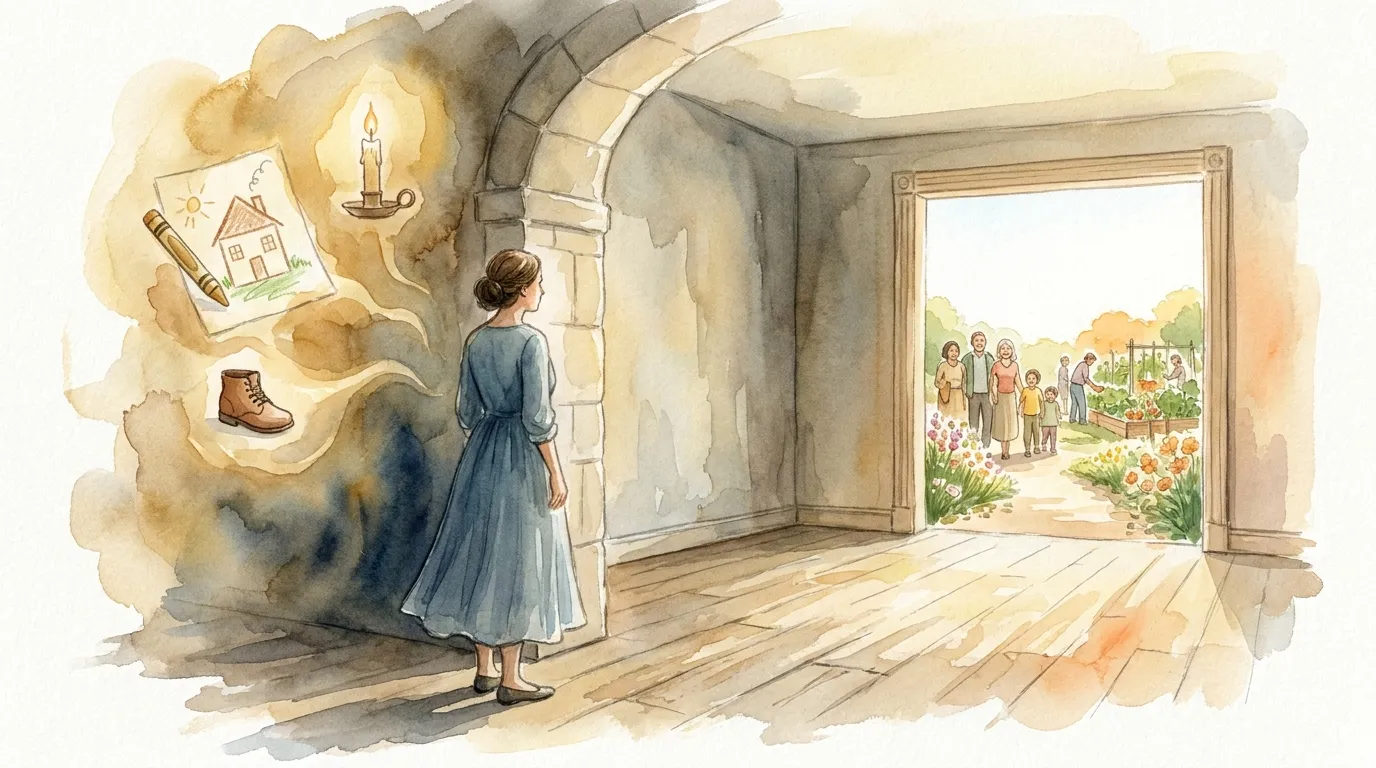
The Silence After 18 Years of Noise
You don't notice the noise until it stops.
For two decades, your home hummed with activity — footsteps on stairs, doors opening and closing, homework on the kitchen table, friends in the living room, arguments about screen time, laughter from bedrooms, the clatter of cereal bowls at midnight.
And then one day, it stops. Not gradually. All at once. The last car pulls out of the driveway, and the house goes quiet in a way it hasn't been quiet since before your first child was born. For the full picture, see our complete baby fever guide.
That silence isn't peaceful. It's deafening. And inside it, a question forms that you've never had to answer before:
Who am I when nobody needs me?
What You Actually Lost
Your children leaving home isn't one loss. It's three simultaneous losses:
Loss 1: Daily Purpose
For 18+ years, you woke up every morning knowing exactly what you needed to do. Feed them. Drive them. Help with homework. Make dinner. Check in emotionally. Manage schedules. Repeat.
That purpose wasn't just a to-do list. It was the organizing principle of your entire life. Every decision — where to live, what job to take, how to spend weekends — was filtered through "what's best for the kids."
When they leave, the filter disappears. And suddenly every decision, from what to have for dinner to whether to change careers, has no framework. You're free. And freedom, paradoxically, feels like falling.
A 2024 study in the Journal of Family Psychology found that 62% of empty-nest mothers reported losing their primary sense of daily purpose within the first month. Not "some" purpose. PRIMARY purpose. The thing that got them out of bed every morning.
Loss 2: The Nurturing Routine
Your body produced oxytocin every single day for 18 years through caregiving actions. Hugging, feeding, comforting, helping, listening. Each action triggered bonding hormones that regulated your mood, reduced stress, and gave you a daily sense of meaning.
When the nurturing stops, the oxytocin stops. Your neurochemistry literally recalibrates, and the transition feels like withdrawal. Sadness, restlessness, and the persistent feeling that something is missing — because chemically, something IS missing.
This isn't metaphorical. Functional MRI studies show that mothers' brains have enhanced activation in nurturing-associated regions (the medial prefrontal cortex and ventral striatum). When daily nurturing stops, those neural pathways go underutilized — like a muscle that atrophies without exercise. The brain registers this as deprivation.
Loss 3: The Mother Identity
"I'm a mom" isn't a role you played — it's who you ARE. Or rather, who you became. Over two decades, the mother identity wove itself into your sense of self so thoroughly that removing it leaves you feeling like a house with the furniture taken out.
The rooms are still there. The structure is intact. But it feels empty because the thing that filled it — daily, active mothering — is gone.

The Three-Loss Model
Understanding that you lost THREE things — not one — is the key to recovery. Because each loss requires a different remedy:
| What You Lost | What You Need | Example Solutions |
|---|---|---|
| Daily purpose | Something to show up for daily | Virtual nurturing, pet, creative practice |
| Nurturing routine | Daily caregiving that produces oxytocin | AIdorable, gardening, volunteering with children |
| Mother identity | New identity beyond "mom" | Career, creative work, community role |
Most empty nest advice focuses only on #3 (identity). "Find yourself!" "Rediscover your passions!" But if you haven't addressed #1 and #2, no amount of identity work will stick — because your brain is still chemically craving daily nurturing input.
That's why this list starts with nurturing. Not because identity doesn't matter. But because you can't build a new identity on a neurochemical foundation that's screaming for caregiving.
8 Ways to Rebuild Purpose
1. Virtual Nurturing (Immediate Relief)
Time: 2-5 min/day Why it works: Gives your oxytocin system a daily input while you figure out bigger changes
Adopt a virtual baby on AIdorable. Feed her every morning. Read the journal entries. Watch her develop personality based on your care.
This isn't replacing your children — no virtual companion could do that. It's giving your nurturing instinct a daily outlet while you rebuild your identity around something bigger than mothering.
Why it's #1: It's immediate, requires zero logistics, costs nothing, and provides the exact neurochemistry (oxytocin) that your brain is craving. You can start tonight, right now, in the time it takes to read this paragraph.
The specific benefit for empty nesters: AIdorable's baby develops personality over weeks and months. She's not a static pet — she grows, changes, and responds to your specific caregiving style. That ongoing development mirrors (in a small, manageable way) the experience of watching a child grow. It's not the same. But it activates the same neural pathways.
2. Pet Adoption (Daily Companionship)
Time: Daily commitment Why it works: Real animal, real dependency, real oxytocin
A dog who needs walking. A cat who purrs in your lap. The daily routine of feeding, grooming, and caring for a pet provides the caregiving structure you lost.
Research from the University of Missouri found that petting a dog for just 15 minutes increases oxytocin by 30% in both human and dog. Your brain gets the nurturing chemistry it's missing, and an animal gets a loving home.
The caveat: This is a 10-20 year commitment. Don't do it impulsively. But if you've been considering it, the empty nest period is actually an ideal time — you have the time and space that pet ownership requires. Consider fostering first to test the fit.
3. Volunteering with Children (Meaningful Nurturing)
Time: 2-5 hours/week Why it works: You get to nurture children who genuinely need it
Reading programs at elementary schools. Mentoring teenagers. Babysitting for young families in your community. Hospital baby cuddling programs (yes, this is real and desperately needed — NICU babies gain weight faster when held regularly).
You have 18+ years of mothering experience. That expertise is valuable. Channeling it toward children who need support transforms your loss into someone else's gain.
The bonus: volunteering with children provides the nurturing AND the social connection AND the identity structure — it addresses all three losses simultaneously.
4. Grandparent Preparation (If Applicable)
Time: Varies Why it works: Redirects nurturing energy toward the next generation
If your children are likely to have children, this is the natural evolution of your nurturing identity. Prepare the nursery. Learn about modern baby care (things have changed since you raised babies — safe sleep guidelines, feeding recommendations, and developmental milestones have all evolved). Build the relationship with your adult children that will make them want you involved.
The key: Don't push. Let your children set the pace. Your role is to be available, enthusiastic, and respectful of boundaries. The best grandparents are the ones who offer help without demanding access.
5. Creative Pursuits (Identity Building)
Time: Daily, flexible Why it works: Creates new identity pathways beyond "mother"
Paint. Write. Garden. Cook seriously. Learn an instrument. Start a blog. Take a photography class.
Creative pursuits build new neural pathways and new identity structures. "I'm a painter" or "I'm learning piano" gives your brain new self-definition to replace the one that left with your children.
The neuroscience: creative activity activates the default mode network — the same brain system involved in self-reflection and identity construction. When you create, you're literally building new identity architecture. It's not a metaphor. It's neuroplasticity.
6. Community Building (Social Structure)
Time: Weekly Why it works: Replaces the social infrastructure that school/activities provided
For 18 years, your social life was organized around children — school events, sports teams, parent groups, carpools. When children leave, the social infrastructure goes with them.
Build new community: join a club, start a walking group, host weekly dinners, volunteer regularly. The social structure provides the belonging that parenting used to provide.
The key insight: Empty nesters who maintain at least 3 regular social activities per week report 50% lower depression scores than those who don't. It's not about the quantity of social interaction — it's about the regularity.
7. Career Reinvention (Professional Purpose)
Time: Varies Why it works: Creates a new primary identity outside the home
Many empty nesters return to work, change careers, start businesses, or turn hobbies into income. Professional purpose can partially replace parental purpose — especially if the work involves helping, teaching, or nurturing others.
The opportunity: Your mothering skills translate directly to careers in education, healthcare, social work, counseling, and childcare. Twenty years of managing schedules, resolving conflicts, and nurturing development IS professional experience — you just didn't have a job title for it.
8. Physical Challenge (Body Purpose)
Time: 30-60 min/day Why it works: Physical achievement creates immediate purpose and endorphin reward
Train for a marathon. Start a yoga practice. Join a hiking group. Learn to dance. Physical goals provide daily structure, measurable progress, and neurochemical reward (endorphins) that partially substitutes for the oxytocin you're missing.
The body-mind connection is real: regular exercise reduces depressive symptoms by 26% in adults aged 45-55, according to a meta-analysis in JAMA Psychiatry. Movement doesn't replace nurturing, but it creates a biochemical foundation that makes identity reconstruction easier.

The Empty Nest Timeline
Understanding the timeline helps normalize the experience. You're not broken because you're still struggling at month 4. You're right on schedule.
Month 1-3: The Crash The silence is overwhelming. You cry at unexpected moments. The house feels too big. You wander into their room and just stand there. This is grief. Let it happen.
The worst part: everyone expects you to be happy. "Freedom! You must be so excited!" And you smile and say yes, and inside you're drowning. The gap between what you're "supposed" to feel and what you actually feel makes the loneliness worse.
Month 4-6: The Search You start trying things — some work, some don't. You volunteer once and feel nothing. You start a project and abandon it. You sign up for a class and skip half the sessions. This is normal. Identity isn't rebuilt in a weekend. Keep searching.
Month 7-12: The Rebuilding Something starts sticking. A routine forms. A friendship deepens. A project captures your interest. The nurturing void is still there, but it's not consuming you anymore. You have your first genuinely good day — not fine, not okay, but GOOD — and it surprises you.
Year 2: The New Normal You've built something new. Not a replacement for mothering — a complement to it. Your children call, and you enjoy the conversation without needing it to fill your entire emotional world. You've become someone your children enjoy visiting, not someone they visit out of obligation.

The Nurturing Instinct Never Retires
Here's the most important thing in this entire article: your nurturing instinct didn't expire when your children left.
It's still there. Still active. Still producing the drive to care for something dependent. The instinct doesn't know your children grew up. It just knows it needs an outlet.
Finding that outlet isn't sad or desperate. It's healthy. It's your brain doing what it evolved to do — seeking caregiving opportunities because caregiving is how humans regulate their emotions and find meaning.
Whether that outlet is a grandchild, a rescue dog, a community of children who need mentoring, or a virtual baby that needs you every morning...
The instinct doesn't judge the recipient. It just needs you to show up.
And showing up — for something, anything, that needs your care — is how you find your way back to yourself.
You didn't stop being a nurturer when your children left. You just started being one in a new way. And that new way is waiting for you to discover it.
Start tonight. Two minutes. Something that needs you. The silence doesn't have to be permanent — you just need to fill it with the right thing.
Related Articles
For the complete guide, see our Baby Fever & Maternal Instinct hub.
You might also find helpful: