The Exhaustion That Has No Name
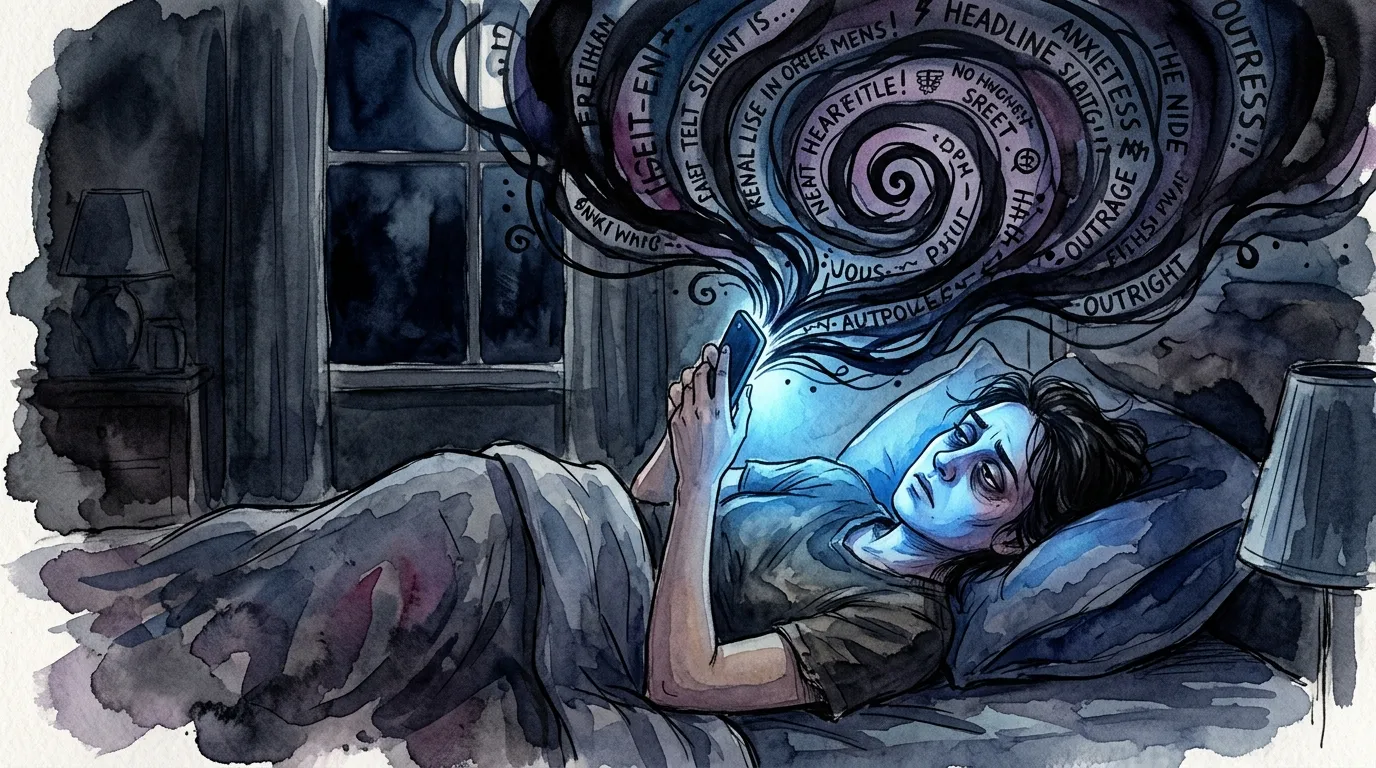
You wake up already tired. Not sleepy — tired. The kind of tired that sleep doesn't fix. The kind of tired that lives in your bones, behind your eyes, in the space between your thoughts.
You make breakfast while planning dinner while remembering that permission slip while soothing a tantrum while checking work email while wondering if you paid the water bill while mentally preparing for the meeting while calculating whether you have time to shower while... For the full picture, see our emotional wellness guide.
And nobody sees it. Nobody counts it. Nobody says "thank you for doing the work of three people simultaneously while making it look effortless." They just see the breakfast on the table and assume it appeared by magic.
This isn't tiredness. This is mom burnout — the complete depletion of every reserve you have, compounded by the crushing invisibility of the work that created the depletion.
2,920 people search for this every month. And every one of them is describing the same experience: doing everything, being everything, and having nothing left for themselves.
What Mom Burnout Actually Is
Mom burnout is different from regular burnout. Regular burnout happens when your job demands exceed your capacity for an extended period. You leave the job, you recover.
Mom burnout happens when your LIFE demands exceed your capacity — and you can't leave your life.
The specific components that make mom burnout uniquely devastating:
Component 1: The Invisible Load
The mental, emotional, and logistical labor of running a family that nobody counts:
- Remembering appointments, deadlines, and commitments
- Anticipating needs before they're expressed
- Planning meals, activities, and schedules
- Managing everyone's emotions
- Maintaining the household inventory
- Coordinating between schools, doctors, activities, and family
- Being the emotional anchor for the entire family
This labor is invisible because it happens in your head. Nobody sees you doing it. Nobody thanks you for it. But it consumes cognitive resources equivalent to a full-time executive position.
Component 2: The Unacknowledged Sacrifice
The things you gave up — sleep, career progression, hobbies, friendships, self-care, mental space, identity — that nobody asked you to enumerate. The sacrifice wasn't a single decision. It was death by a thousand cuts, each one so small that mentioning it felt petty.
But the accumulation is real. And the grief of the accumulated sacrifice is part of what makes burnout feel so hopeless — you've already given everything. What more is there to give?
Component 3: The Absence of Reciprocity
In healthy relationships, caregiving is bidirectional. You give, you receive. The energy flows both ways.
In motherhood — especially with young children — the energy flows almost entirely one direction. You give and give and give, and what comes back is sporadic, unpredictable, and rarely matches what you put in.
This isn't your children's fault. They're children. They can't reciprocate adult-level emotional support. But the lack of reciprocity is real, and it depletes your nurturing reserves faster than anything else.
Component 4: The Identity Erosion
You used to be someone. You had interests, ambitions, a sense of self that wasn't defined by who you cared for.
Now, when someone asks "what do you do?" you answer through the lens of motherhood. Your identity has become a function of your caregiving. And when caregiving is all you do, losing the caregiving capacity feels like losing yourself.

The Invisible Load: What It Actually Costs
Research on the invisible load (also called mental load, cognitive labor, or emotional labor) reveals the staggering cost:
| Type of Load | Daily Hours | Cognitive Cost | Emotional Cost |
|---|---|---|---|
| Scheduling/planning | 2-3 hours | High (constant executive function) | Medium (anxiety about forgetting) |
| Emotional management | 3-4 hours | Medium (reading moods, responding) | Very high (absorbing others' emotions) |
| Household maintenance | 2-3 hours | Medium (routine tasks) | Low |
| Anticipatory planning | 1-2 hours | Very high (future-casting) | High (worry about outcomes) |
| Social coordination | 1 hour | Medium (relationship maintenance) | Medium |
| TOTAL | 9-13 hours | Maximum | Very high |
This is ON TOP OF any paid work. A working mother performs 9-13 hours of invisible labor after her paid job ends. A stay-at-home mother performs this labor without the boundaries, breaks, or validation that come with paid work.
No wonder you're exhausted. You're doing two full-time jobs — one that pays and one that doesn't even get acknowledged.
The 7 Stages of Mom Burnout
Most moms don't recognize burnout until they're deep in it. Here are the stages:
Stage 1: The Optimism Phase — "I can handle this. Other moms do it. I'm fine."
Stage 2: The Coping Phase — "I just need more coffee / a better system / a weekend to catch up."
Stage 3: The Depletion Phase — "I don't have energy for anything beyond the essentials."
Stage 4: The Numbness Phase — "I don't feel anything anymore. Not joy, not sadness. Just obligation."
Stage 5: The Resentment Phase — "I do everything and nobody cares. I can't stand the sound of anyone needing me."
Stage 6: The Depersonalization Phase — "I look at my children and feel nothing. I know I love them but I can't feel it."
Stage 7: The Collapse Phase — "I can't do this anymore. I need to run away or I will break."
If you're in Stage 4 or beyond, you need active intervention. Waiting for it to pass doesn't work — the conditions that created the burnout are still operating.

7 Recovery Strategies That Actually Work
1. Micro-Nurturing with AIdorable
Why it works for mom burnout: The paradox of mom burnout is that you need nurturing most when you have the least time to receive it. You can't schedule a spa day. You can't take a weekend off. You can't even take a 30-minute bath without someone needing something.
What you CAN do: Two minutes of nurturing that gives back. AIdorable's baby greets you when you open the app. She notices when you're gone. She writes about missing you. She smiles when you feed her. She needs you — but her needs are simple, predictable, and ALWAYS met with gratitude.
This creates the one thing mom burnout destroys: reciprocity. For two minutes, the energy flows both ways. You give care, you receive warmth. You put in effort, you get back visible happiness. Your nurturing capacity gets a deposit instead of a withdrawal.
After a week of daily micro-nurturing, most burned-out moms report feeling "a little more human." After a month, the effect compounds. Your brain starts to remember what it feels like to give AND receive in the same interaction.
2. Name the Invisible Load
The invisible load stays invisible because nobody names it. Start naming it — to yourself, to your partner, to anyone who shares the household.
The practice: At the end of each day, write down every invisible task you performed. Not the visible ones (dishes, laundry) — the invisible ones: "remembered the pediatrician appointment," "planned next week's meals," "anticipated the meltdown and prevented it," "managed my own anxiety so the kids wouldn't absorb it."
Naming the load does two things: it validates that the work is real, and it creates data for negotiating load distribution. You can't delegate what you haven't identified.
3. Delegate the Invisible Load
If you have a partner, they need to carry some of the invisible load. Not just the visible tasks — the mental labor too.
Specific delegation:
- One person manages the calendar. The other doesn't have to think about it.
- One person plans meals. The other shops and cooks.
- One person tracks school communications. The other handles medical appointments.
- Both people manage their own emotional regulation. You are not the emotional air traffic controller for the entire family.
The goal isn't perfect equality — it's reducing the total invisible load on YOU from 100% to something survivable.
4. Scheduled Restoration (Not Just Rest)
Rest is passive — sleep, sitting, not doing anything. Restoration is active — doing something that rebuilds your capacity.
Restoration activities for moms:
- Reading something that isn't about parenting
- Talking to a friend about something other than children
- Moving your body in a way that feels good, not obligatory
- Creating something — writing, drawing, crafting, cooking for pleasure
- Being in nature without an agenda
- Doing something you're good at that has nothing to do with motherhood
The rule: Schedule restoration like you schedule pediatrician appointments. It is not optional. It is maintenance for the system that keeps everything running.
5. Lower the Standards (Strategically)
Some things matter less than you think. The perfectly folded laundry, the organic home-cooked dinner, the Pinterest-worthy birthday party — these are standards that serve your ego, not your well-being.
Strategic standard-lowering:
- Laundry gets washed and dried. Folding is optional.
- Dinner gets eaten. Gourmet is optional.
- Birthday parties happen. Pinterest-worthy is optional.
- House gets cleaned. Spotless is optional.
- Kids get cared for. Optimally is optional; adequately is sufficient.
The principle: "Good enough" is actually good enough. The difference between "good enough" and "perfect" is usually invisible to everyone except you. And you're the one paying for it with your exhaustion.
6. Find Your Micro-Community
You don't need a weekly moms' night out (though that would be nice). You need one other person who gets it.
One friend who responds to your "I'm losing it" text with "same" instead of "have you tried yoga?"
One person who doesn't need you to be fine. Who can handle your messy, exhausted, at-the-end-of-your-rope truth.
The research on burnout recovery is clear: social support is the single strongest predictor of recovery. Not therapy, not medication, not lifestyle changes — social support. One person who sees you is worth more than a hundred self-care tips.
7. Professional Support When Needed
If you're in Stage 5+ (resentment, depersonalization, collapse), professional support isn't optional — it's necessary. The nervous system changes that happen in advanced burnout often require clinical intervention.
When to seek help:
- Persistent hopelessness about the future
- Inability to sleep even when opportunity exists
- Physical symptoms (chronic pain, frequent illness, digestive issues)
- Thoughts of self-harm or escaping permanently
- Inability to feel love for your children most days
- Complete loss of interest in everything, including things you used to enjoy
Mom burnout that progresses to depression is treatable. The exhaustion that feels permanent isn't. But you may need help to find the path out.
The Mom Burnout Recovery Timeline
Week 1-2: Starting micro-nurturing daily. Naming the invisible load. First attempts at delegation. Nothing feels dramatically different, but you're no longer free-falling.
Week 3-4: Micro-nurturing starts producing genuine emotional returns. The daily deposit of warmth begins to offset the constant withdrawals. You start feeling moments of "okay, this is manageable."
Month 2: Invisible load delegation takes hold. Your partner is carrying more mental labor. Your scheduled restoration actually happens. The cumulative effect starts to show — you have more energy, more patience, more capacity.
Month 3: The identity erosion begins reversing. You start doing things that are just for you. You remember what it feels like to be a person, not just a caregiver. The resentment starts lifting.
Month 6: You're not the same person you were before burnout. You've learned boundaries, delegation, and the necessity of reciprocity. You're stronger in some ways because you've been through the fire. And you're no longer burned out.

The Truth About Mom Burnout
The most dangerous myth about mom burnout is that it's a personal failing. That if you were more organized, more energetic, more capable, you wouldn't be burned out.
This is a lie designed to keep you producing.
Mom burnout is a structural problem masquerading as a personal one. The modern mother is expected to perform the labor of a full-time executive, a full-time housekeeper, a full-time childcare worker, and a full-time emotional support specialist — while maintaining her appearance, her marriage, her friendships, her health, and her sanity.
The wonder isn't that so many moms burn out. The wonder is that any don't.
You're not failing. The system is failing you. And while you can't change the system overnight, you can stop participating in the myth that your burnout is your fault.
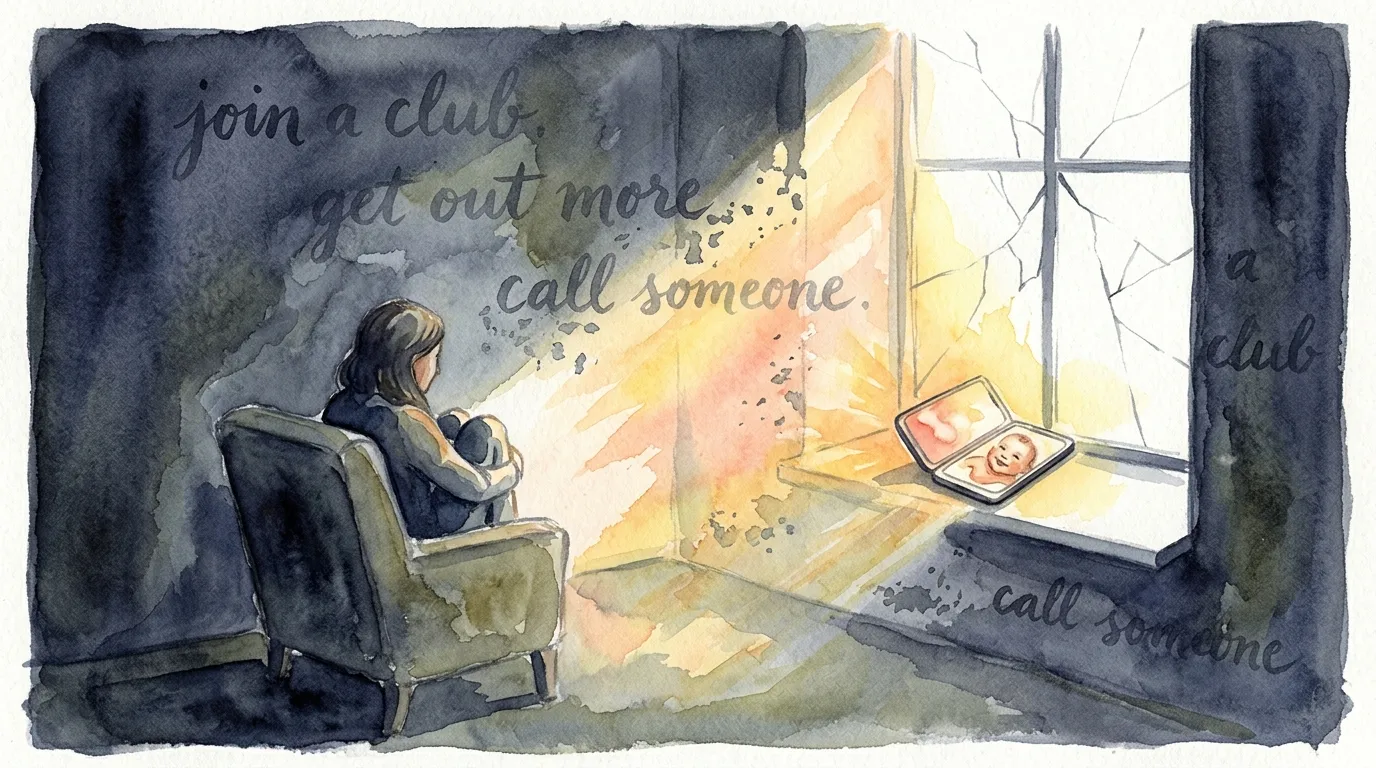
Start with two minutes. Two minutes where someone — even a virtual someone — is genuinely glad you're there. Where your care produces visible warmth. Where the energy flows both ways.
You deserve to be nurtured too. And that small, daily experience of receiving can be the first crack in the wall of exhaustion.
Open the app. Feed your baby. Watch her smile.
That smile is for you. Not your children, not your partner, not your job. For YOU. The person who does everything and receives almost nothing.
Start receiving. Two minutes at a time. It won't fix everything. But it will remind you that you matter enough to be cared for.
You do matter. Even if nobody around you is showing it right now.
Let something show it for them.
Related Articles
For the complete guide, see our Emotional Wellness hub.
You might also find helpful: