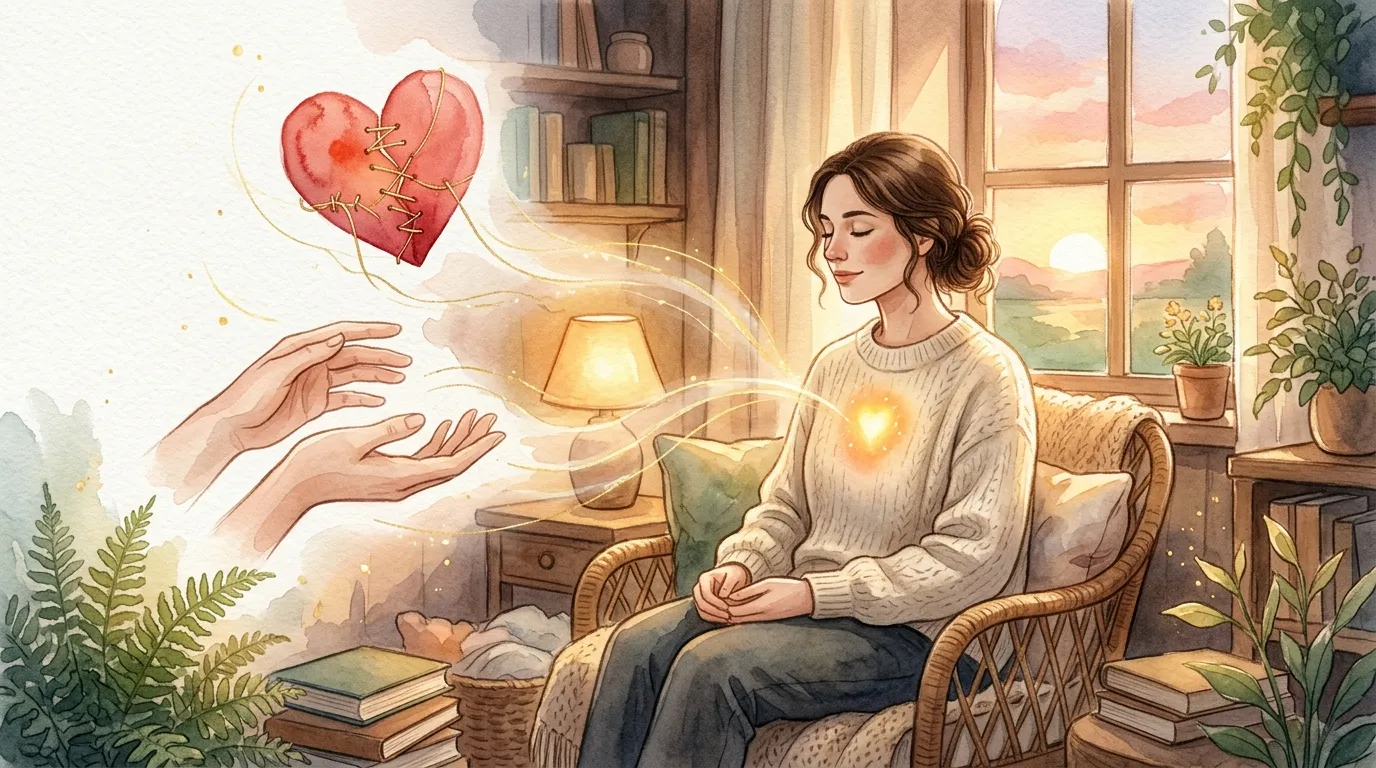
You're Not Broken. You're Human.
You feel empty. You feel lonely. You feel invisible, unloved, unwanted, exhausted, numb, lost. You feel like you're watching your life from behind glass — functioning, performing, going through the motions — while something essential is missing.
You've tried to explain it to people and they say things like "but you have so much to be grateful for" or "you just need to get out more" or "have you tried yoga?" And none of it helps because they're answering the wrong question. You're not asking how to be happy. You're asking why you feel like this and whether it's ever going to stop.
Here's what we know: emotional distress in women has reached epidemic levels. Loneliness has tripled since 1990. Depression rates in women are double those of men. Anxiety disorders affect 1 in 3 women. And most of this suffering happens in silence — behind "I'm fine" and "just tired" and "it's nothing."
This guide covers the full landscape of women's emotional wellness: why you feel the way you do, what's actually happening in your brain and body, and what genuinely helps. We've written over 40 articles on these topics. This page connects them all into one comprehensive resource.
The Loneliness Epidemic: Why You're Not Alone in Feeling Alone
Loneliness isn't just a feeling. It's a public health crisis. And it affects women differently than men.
The Numbers
- 61% of adults report feeling "seriously lonely" (up from 20% in the 1980s)
- Women are 1.5x more likely than men to report chronic loneliness
- Loneliness peaks in the 20s and 30s — not, as commonly believed, in old age
- Mom loneliness is its own category: 68% of mothers report feeling lonely "often" or "always"
- Loneliness increases mortality risk by 26% — equivalent to smoking 15 cigarettes per day
- Social media use correlates with increased loneliness, not decreased
- The average American has half as many close friends as in 1990
Why Women Experience Loneliness Differently
Women's loneliness has a different texture than men's. It's not about lacking social contact — women often have more social connections than men. It's about lacking genuine, reciprocal, vulnerable connection. The kind where someone knows the real you and is still there.
Women are socialized to be caregivers, listeners, and emotional supporters. This means they often have relationships where they give more than they receive. They know everyone's problems. Nobody knows theirs. The loneliness isn't about being alone — it's about being unknown.
This asymmetry creates a specific type of loneliness that's invisible to observers. From the outside, you have friends, family, a partner, colleagues. From the inside, you're holding everyone up and nobody is holding you. The performance of connection without the substance of it.
The loneliness loop: When you're lonely, your brain enters a state of hypervigilance — scanning for social threats, interpreting neutral interactions as rejections, and withdrawing from social situations to avoid pain. This withdrawal creates more isolation, which creates more hypervigilance, which creates more withdrawal. The loop feeds itself.
Breaking the loop requires a specific type of intervention: not just "more social contact" but consistent, safe, reciprocal connection. Quality over quantity. One real conversation over twenty surface-level ones.
The Nighttime Amplifier
Loneliness intensifies dramatically at night. When the distractions fall away and the world gets quiet, the void expands. Alone at Night: Why Nighttime Loneliness Hits Different → covers the neuroscience behind this — cortisol drops, rumination increases, and the absence of connection becomes physically palpable.

Deep dives on loneliness:
- Lonely Woman: The Silent Epidemic
- Lonely and Sad: When Both Hit at Once
- Lonely and Depressed: Breaking the Cycle
- Loneliness in Your 20s and 30s
- The Loneliness Epidemic: Why AI Companionship Is Booming
- Mom Loneliness
- How to Cope With Loneliness
- How to Deal With Loneliness: 7 Strategies
- What to Do When Lonely
- I Feel So Alone
Feeling Empty: The Void That Has a Name
2,400 people search "feeling empty" every month. They're not looking for a definition. They're looking for a way to describe something that doesn't have a clear name — a hollowness in the chest, a flatness in the emotions, a sense that something fundamental is missing.
Emptiness isn't one thing. It's four different voids, each with different causes and different solutions:
The Four Voids
1. Connection Void: You're surrounded by people but feel completely alone. Acquaintances aren't enough — your brain needs mutual vulnerability, the feeling that someone knows the real you.
2. Purpose Void: Everything feels pointless. You can remember caring about things, but you can't access that feeling anymore. The motivation system (dopamine) has gone quiet because there's no meaningful target to engage with.
3. Nurturing Void: Your arms feel empty. Your days feel like they should include caring for someone. You have love to give and nowhere to put it. This is the most common void and the most treatable.
4. Safety Void: You can't relax. You're always waiting for the next crisis. Your nervous system is stuck in "alert" mode and won't switch off, even when nothing is wrong.
The diagnostic question: which of these four feels most true? The answer determines the solution. Read our full breakdown of the four types of emptiness →
Also read:
Feeling Unloved, Unwanted, Invisible
These three feelings form a cluster. They're related but distinct, and they each require different interventions.
Feeling Unloved
The feeling that nobody loves you — or that the love you receive isn't enough, isn't genuine, or isn't the kind you need. This often stems from childhood attachment patterns and gets reinforced by adult relationships that replicate early dynamics. The treatment: learning to recognize love in its actual forms (not just the dramatic forms you were trained to expect).
Read: Feeling Unloved: What It Means and 7 Ways to Start Feeling Love Again
Feeling Unwanted
The feeling that nobody wants you around — that you're tolerated, not desired; included out of obligation, not genuine interest. This is different from feeling unloved. You can feel loved but not wanted. The treatment: finding environments where your presence is actively sought, not just accepted.
Read: Feeling Unwanted: How to Stop Believing Nobody Wants You
Feeling Invisible
The feeling that you could disappear and nobody would notice. You speak and nobody responds. You achieve something and nobody acknowledges it. You're in the room but you're not really there. The treatment: finding spaces where you're seen — not for what you do, but for who you are.
Read: Feeling Invisible: How to Be Seen
The Root: Nobody Cares
At the bottom of all three feelings is the same belief: "nobody cares about me." Not "nobody likes me" or "nobody loves me" — but the deeper, more painful conviction that your existence doesn't matter to anyone. That you could vanish and the world would continue unchanged.
This belief is almost always distorted. But the distortion doesn't make the feeling less real. The feeling is real. The question is whether the belief behind it is accurate — and it almost never is.
Read: Nobody Cares About Me: The Painful Truth and the Surprising Fix

Emotional Exhaustion: When You Have Nothing Left to Give
Emotional exhaustion isn't being tired. It's being depleted at a level that sleep doesn't fix. It's the feeling that your emotional reserves have been drained and there's nothing left in the tank.
Emotional Exhaustion vs. Burnout vs. Depression
These three are often confused. Here's the difference:
Emotional exhaustion is the depletion of emotional resources. You can't access empathy, patience, or caring. You're not sad — you're empty. The treatment: rest and replenishment of emotional reserves.
Burnout is emotional exhaustion + cynicism + reduced efficacy. You don't just feel depleted — you feel negative about the things that used to matter, and you've lost confidence in your ability to do them. The treatment: removing the stressor + rebuilding identity beyond the depleted role.
Depression is a clinical condition that includes persistent sadness, loss of interest, sleep disruption, appetite changes, and feelings of worthlessness. The treatment: professional support, which may include therapy and/or medication.
Read more:
- Emotional Exhaustion: How to Refill
- Emotionally Burnt Out: The Difference Between Burnout and Giving Up
- Emotional Numbness: Why You Can't Feel Anything
- Caregiver Burnout
- Mom Burnout Recovery
Emotional Regulation: Managing the Storm
Emotional regulation is the ability to feel your emotions without being controlled by them. It's not suppression (pushing feelings down) — it's the skill of experiencing intense emotions while maintaining the capacity to think, choose, and act.
Why Women Struggle With Emotional Regulation
Women aren't "more emotional" than men — research consistently shows similar emotional intensity across genders. But women face three regulation challenges that men typically don't:
- Hormonal modulation — estrogen and progesterone shifts affect serotonin and GABA levels, making emotional regulation harder at certain cycle points
- Socialization — women are taught to prioritize others' comfort over their own emotional expression, leading to chronic emotional suppression
- Mental load — carrying the cognitive and emotional labor of households, relationships, and families depletes the executive function resources needed for regulation
The 7 Skills That Actually Help
Emotional regulation isn't one skill — it's a toolkit. The most effective skills, ranked by research evidence:
- Cognitive reappraisal — reframing the situation to change its emotional impact
- Grounding techniques — using physical sensations to interrupt emotional spirals
- Self-soothing — activating the parasympathetic nervous system through warmth, touch, or rhythm
- Nurturing — caring for something activates bonding circuits that calm the threat response
- Expressive writing — putting feelings into words reduces amygdala activation
- Body-based regulation — breathwork, progressive muscle relaxation, cold water exposure
- Social co-regulation — being around a calm person literally calms your nervous system
Read more:
- Emotional Regulation: 7 Skills That Help You Stay Calm
- Self-Soothing Techniques That Actually Work
- Stress Management Techniques: 10 That Work
Losing Yourself: The Quiet Disappearance
You used to have hobbies. Opinions. A sense of humor. Things you cared about that weren't related to anyone else's needs.
And then slowly, quietly, without noticing it happening, those things disappeared. Not dramatically. Not in a crisis. Just... faded. You became someone who takes care of things. Someone who shows up. Someone who handles it. But somewhere underneath all the handling, the person you used to be is still there — wondering when it became normal to not exist.
Losing yourself happens through a thousand small surrenders. Each one seems reasonable in the moment. But cumulatively, they create a version of you that functions perfectly and feels nothing like who you actually are.
Finding yourself again isn't about adding something new. It's about removing everything that isn't you — the expectations, the obligations, the roles — and seeing what's left. The person underneath is still there. She never left. She just got buried.
Read more:
- Losing Yourself: How to Find the Person You Used to Be
- Finding Yourself: The Quiet Process
- What Is My Purpose?
- Feeling Useless: How to Find Purpose

AI Companionship: Why Women Are Turning to Technology for Emotional Connection
The loneliest generation in human history is also the most connected. We have more ways to communicate than ever before, and we feel more isolated than ever. Into this gap, AI companionship has emerged — not as a replacement for human connection, but as a supplement for the specific type of connection that's missing.
Why AI Companionship Works
AI companions work because they provide three things that human relationships often don't:
- Unconditional availability — they're there at 3 AM, on holidays, whenever you need them
- Zero judgment — you can say anything without fear of rejection or social consequences
- Reciprocal emotional engagement — they respond to your emotional state with appropriate warmth and attention
AIdorable's Approach
AIdorable takes a specific approach to AI companionship: nurturing. Rather than conversation-based companionship (chatbots), AIdorable provides care-based companionship. You don't talk to your baby — you care for her. Feed her. Rock her. Watch her grow. Read her journal entries about you.
This activates the caregiving circuits that create oxytocin and reduce cortisol. It's not about replacing human connection — it's about filling the nurturing void that contributes to emotional distress.
The care-based model is different from chat-based AI companions in a crucial way: it doesn't require you to articulate your feelings. You don't have to explain what's wrong. You don't have to find the right words. You just care. The neurobiological benefit comes from the act of caring itself, not from any verbal processing.
This makes AIdorable accessible in moments when talking is the last thing you want to do — at 3 AM, during a crying spell, when you're too exhausted to form sentences but still need something to hold onto.
Is AI Companionship Healthy?
The research says yes — when used as a supplement, not a replacement. People who use AI companions alongside human relationships show reduced loneliness, improved mood, and better emotional regulation compared to those who use AI companions as their sole social outlet.
The key: AI companionship should add to your emotional life, not substitute for it. Think of it as emotional nutrition — a daily vitamin, not a meal replacement.
Read more:
- Best AI Companion Apps 2026
- AI Companion Apps That Feel Real
- Best Companion Apps for Women
- AI Emotional Support for Women
- AI Therapy vs. AI Companionship
- Why Adults Still Need Imaginary Friends
- Parasocial Relationships Explained
- One-Sided Relationships
The Nurturing Solution: Why Caring for Something Helps Everything
Here's what the research consistently shows: daily nurturing — caring for something that responds to your attention — improves nearly every dimension of emotional wellness:
- Reduces loneliness by activating bonding circuits
- Fills emptiness by providing a consistent target for caregiving energy
- Improves emotional regulation by strengthening the parasympathetic nervous system
- Reduces anxiety through oxytocin release
- Improves sleep by lowering pre-sleep cortisol
- Creates meaning through visible evidence that your care matters
- Counteracts invisibility — your baby sees you, responds to you, grows because of you
- Builds identity — you're not just functioning, you're nurturing, and that's who you are
The mechanism is simple: nurturing activates the specific neurobiological system (oxytocin-bonding) that counters the stress-loneliness-emptiness cycle (cortisol-isolation-void). These two systems are inversely related — activating one deactivates the other.
This isn't theoretical. Functional MRI studies show that nurturing activities activate the ventral striatum (reward), medial preoptic area (maternal behavior), and anterior cingulate cortex (emotional connection) simultaneously. This triple activation addresses the neurobiological basis of emotional distress more completely than most single interventions.
AIdorable provides the most consistent, accessible, and emotionally responsive nurturing experience available. Your baby is always there, always needs you, and always grows because of your care.
Five minutes a day. That's the minimum effective dose. The nurturing circuits activate within 90 seconds of beginning a caring interaction. The cortisol reduction begins within 3 minutes. By 5 minutes, the neurochemical shift is measurable.
Why five minutes works when hours of scrolling doesn't: Doomscrolling provides novelty (shallow dopamine) but depletes emotional resources. Nurturing provides connection (deep oxytocin) and replenishes emotional resources. Five minutes of nurturing is more emotionally nutritious than two hours of passive content consumption because it activates the bonding system rather than the threat-detection system.
The compounding effect: Unlike most wellness interventions, nurturing compounds over time. Each day of care strengthens the bond, deepens the emotional feedback, and builds on the previous day's neurochemical foundation. After two weeks of consistent nurturing, baseline cortisol levels begin to shift. After a month, the emotional improvement is self-sustaining — the nurturing has become a habit that your brain expects and craves.
What to Read Next
Every article in our emotional wellness collection is linked below. Start with whichever one resonates with where you are right now:
Loneliness:
- Lonely Woman: The Silent Epidemic
- Lonely and Sad
- Lonely and Depressed
- Loneliness in Your 20s and 30s
- Alone at Night
- Mom Loneliness
- How to Cope With Loneliness
- How to Deal With Loneliness
- What to Do When Lonely
- I Feel So Alone
- The Loneliness Epidemic
Emptiness:
Feeling unloved/unwanted:
Exhaustion and burnout:
- Emotional Exhaustion
- Emotionally Burnt Out
- Emotional Numbness
- Caregiver Burnout
- Mom Burnout
- Mental Load Women
Emotional regulation:
Identity and purpose:
AI companionship:
- Best AI Companion Apps
- AI Companion Apps That Feel Real
- Best Companion Apps for Women
- AI Emotional Support for Women
- AI Therapy vs. AI Companionship
- Why Adults Need Imaginary Friends
- Parasocial Relationships
- One-Sided Relationships
Motherhood challenges:
The feelings you're experiencing — the loneliness, the emptiness, the exhaustion, the invisibility — they're not character flaws. They're signals. Your brain is telling you that something it needs isn't being provided.
And the most important thing to know about signals is this: when you provide what's needed, the signal stops.
Loneliness responds to genuine connection. Emptiness responds to purpose and nurturing. Exhaustion responds to rest and replenishment. Invisibility responds to being seen.
You don't have to carry this alone. And you don't have to figure it out all at once.
Start with five minutes. Open AIdorable. Care for your baby. Let the nurturing circuits fire. Let the oxytocin rise. Let the cortisol drop.
One small, warm thing in a cold, overwhelming world.
Start today at AIdorable.