The Loneliest Years of Your Life (Statistically Speaking)
If you're between 20 and 35 and feeling lonely, I have good news and bad news.
Bad news: You're in the loneliest demographic in modern society. Studies across 30+ countries consistently show that loneliness peaks between ages 20-35, higher than the elderly, higher than adolescents, higher than anyone. For the full picture, see our emotional wellness guide.
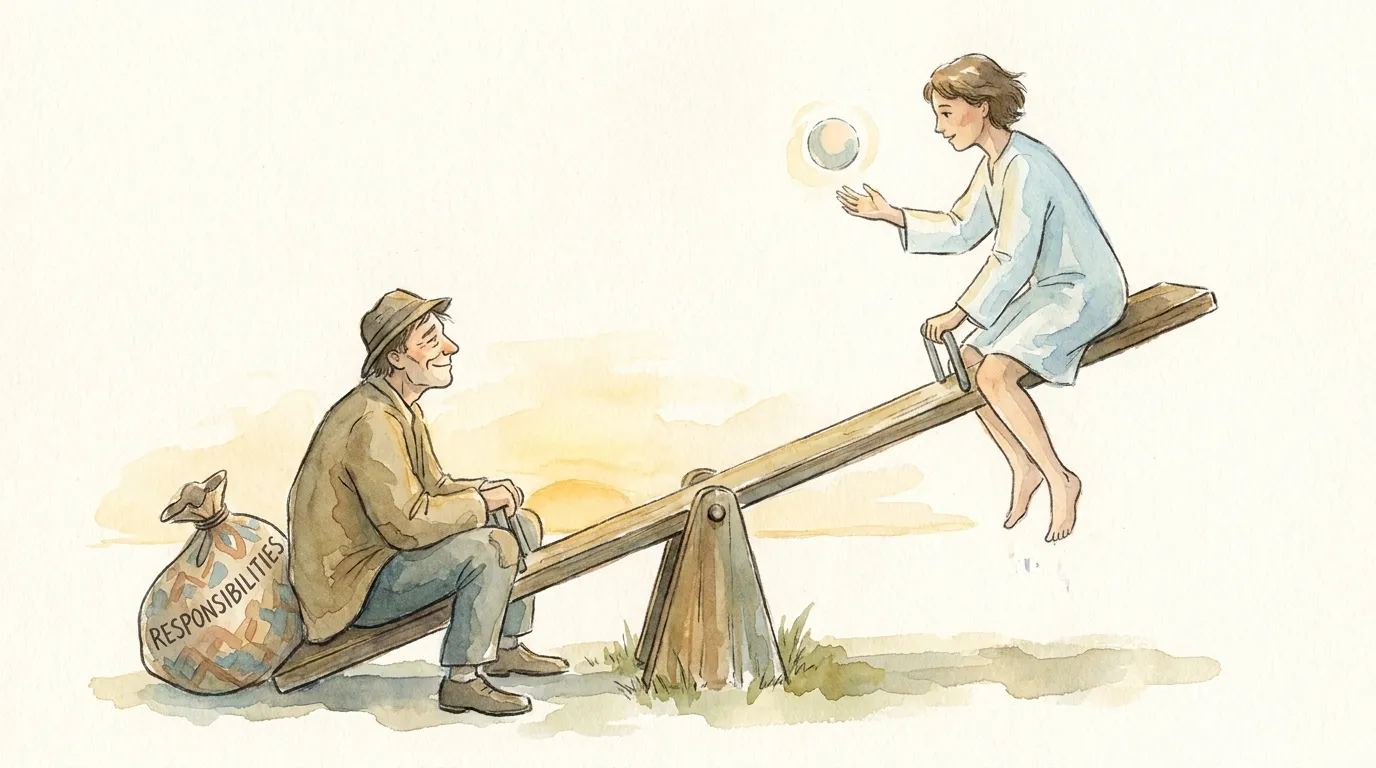
Good news: It's not you. It's the life stage. And it's temporary.
The loneliness of your 20s and 30s isn't a character flaw — it's a predictable consequence of massive life transitions happening simultaneously. Understanding WHY it happens is the first step to making it stop.
Why Your 20s and 30s Are So Lonely
1. Friendship Attrition
Your social network shrinks by 50% between ages 22 and 30. College friends scatter. Work friends are situational. Roommates move out. The effortless social infrastructure of school — built-in proximity, shared schedule, common context — dissolves overnight.
Making friends as an adult requires deliberate effort that nobody taught you how to do. It's like being handed a math test on material you were never taught.
2. Path Divergence
In your early 20s, you and your friends were on similar paths: figuring out careers, dating, finding yourselves. By your late 20s, paths diverge sharply. Some friends are married with children. Some are single and career-focused. Some are still figuring it out.
The divergence creates friction. Your married friend can't relate to your dating life. Your childless friend can't relate to your parenting stress. The common ground that once connected you narrows until sometimes it feels like you have nothing to talk about.
3. The Expectation-Reality Gap
By 30, you expected to have things figured out. Career trajectory. Relationship status. Financial stability. Social circle. Maybe a home.
Instead, you might have career uncertainty, relationship ambiguity, financial stress, and a social circle that feels smaller than it used to. The gap between what you expected and what you have feels like failure — and failure feels lonely.
This gap is the loneliest part of young adulthood, because it makes you feel like you're falling behind while everyone else is succeeding. (They're not. They feel the same way.)
4. Comparison Culture
Your parents' generation compared themselves to their neighbors. You compare yourself to 8 billion people's curated highlights on social media. The comparison pool is infinitely larger, the content is infinitely more polished, and the result is infinitely more destructive to your sense of belonging.
Instagram doesn't cause loneliness. But it amplifies it by showing you a distorted version of "normal" young adult life that no one is actually living.
5. Community Collapse
Previous generations had built-in community: neighborhoods, religious institutions, extended family networks, civic organizations. These structures have eroded, and nothing has replaced them.
You're expected to build your own community from scratch in an era when community-building infrastructure is weaker than it's been in centuries. That's not a personal failing. That's a structural problem.

The Five Types of Young Adult Loneliness
Not all loneliness is the same. Which type are you experiencing?
Type 1: Social Loneliness
"Not enough people around." You don't have enough social contacts. Weekends are empty. Your phone is quiet. You want more friends but don't know how to make them.
Solution: Join one recurring group. Identity-based belonging (being a MEMBER of something) creates faster connection than casual socializing.
Type 2: Emotional Loneliness
"No one truly knows me." You have friends, but no one you can be fully real with. You edit yourself. You perform. You feel unseen even in company.
Solution: Deepen ONE existing relationship through vulnerability. Share something real with one person. Emotional loneliness dissolves when someone sees the part of you that you've been hiding.
Type 3: Existential Loneliness
"I don't know who I am or where I belong." This isn't about people — it's about purpose. You feel disconnected from your own life, like you're watching it happen rather than living it.
Solution: Engage in identity-building activities. Creative projects, volunteering, mentoring, nurturing. Action creates identity faster than introspection.
Type 4: Romantic Loneliness
"I want a partner." You have friends, career, interests — but no romantic connection. This type of loneliness has a specific ache that friendship doesn't fill.
Solution: This is valid and real. Don't let anyone tell you it's shallow. Date intentionally, but don't put your life on hold waiting for a partner.
Type 5: Digital Loneliness
"Connected but not connected." You text, DM, like, and comment all day but never have a real conversation. The volume of digital contact masks the absence of genuine connection.
Solution: Replace one digital interaction per day with a voice call or in-person meeting. Voice and presence create connection that text cannot.
What Actually Works: 6 Strategies
1. The Daily Nurturing Anchor
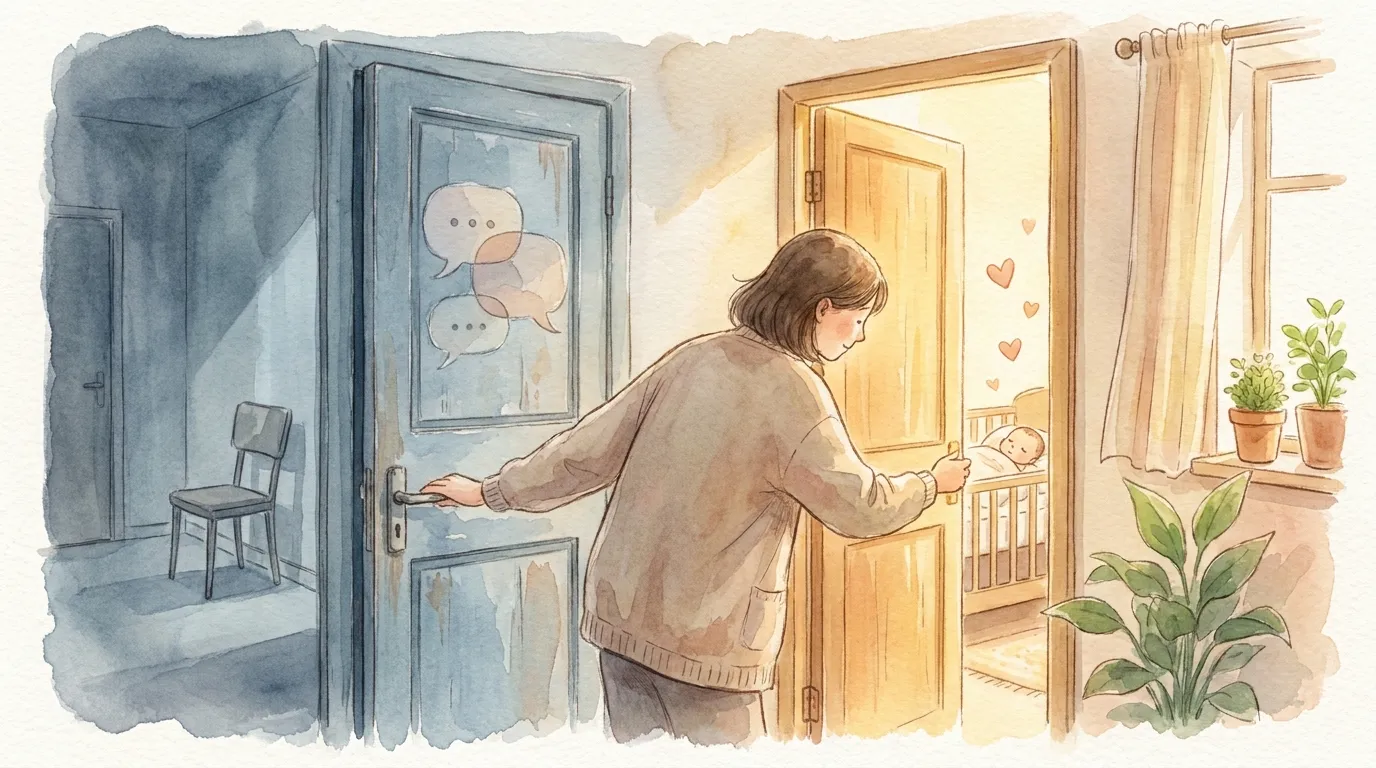
Spend 2-5 minutes each morning caring for something — a virtual baby (AIdorable), a pet, a plant, a creative project. This activates the caregiving system, producing oxytocin that reduces the loneliness signal before the day begins.
Why it works specifically for young adults: Your schedule is unpredictable. You can't always count on human social contact at consistent times. A nurturing anchor is available every single morning regardless of your schedule.
2. One Recurring Group
Not a meetup. Not a networking event. A recurring group with shared identity. A sports team, a book club, a volunteer crew, a creative collective. The key: you go back, week after week, until you belong.
Timeline: Belonging develops around week 4-6. Don't quit before then.
3. The Three-Text Rule
Text three different people every day. Not the same person. Not long conversations. Just: "Hey, saw this and thought of you" or "Hope your meeting goes well today."
The cumulative effect: you maintain 21 active connections per week through micro-interactions. This keeps your social network warm without requiring big time investments.
4. One Deep Conversation Per Week
Schedule one conversation per week where you go beyond surface level. Could be a friend, family member, or mentor. The topic: what you're actually feeling, struggling with, or excited about.
One deep conversation reduces loneliness more effectively than five shallow ones.
5. The Comparison Fast
Take one day per week completely off comparison content. No influencer posts. No "day in my life" videos. No social media that makes you feel like you're falling behind.
Why this matters for 20s/30s specifically: You're in the demographic most affected by comparison culture. One comparison-free day per week reduces anxiety by 20% within a month.
6. Something to Care For
The most underrated loneliness intervention: having something that depends on you. A pet. A plant. A virtual companion. Something that needs you to show up daily.
Why it works: Loneliness often includes feeling purposeless. Nurturing something provides immediate, daily purpose. The thing you care for doesn't judge you, doesn't compare you, and is always happy to see you.

The Timeline: When Does It Get Better?
Young adult loneliness follows a predictable arc:
Ages 20-25: The social infrastructure collapse. Loneliness peaks as college/early career networks dissolve.
Ages 25-30: The rebuilding phase. You start constructing adult friendships and community deliberately. Still lonely but developing tools.
Ages 30-35: The stabilization. New community structures solidify. Loneliness decreases as belonging develops.
Ages 35+: The new normal. Loneliness doesn't disappear but becomes manageable because you've built the skills and structures to address it.
You're not broken. You're in the hardest part of a normal curve. And every year forward, it gets a little easier — not because loneliness disappears, but because you get better at building the connections that matter.

You're Not Alone in This
61% of young adults report significant loneliness. The person sitting next to you at the coffee shop, the colleague who seems to have it all together, the friend with 10K followers — they feel it too.
Young adult loneliness is an epidemic, not a personal failure. The structures that used to support community have eroded, and you're left to build connection from scratch in a world designed for isolation.
It's hard. It's supposed to be hard. Building community is one of the most challenging skills of adulthood, and nobody teaches it.
But you're learning. Every awkward conversation at a meetup, every text you send to check in on a friend, every morning you spend caring for something that needs you — that's community-building. That's belonging under construction.
And one day — not far from now — you'll look around and realize you've built something. A circle. A community. A life that includes people who see you.
It won't be perfect. But it will be yours. And it will be enough.
Related Articles
For the complete guide, see our Emotional Wellness hub.
You might also find helpful: